

























































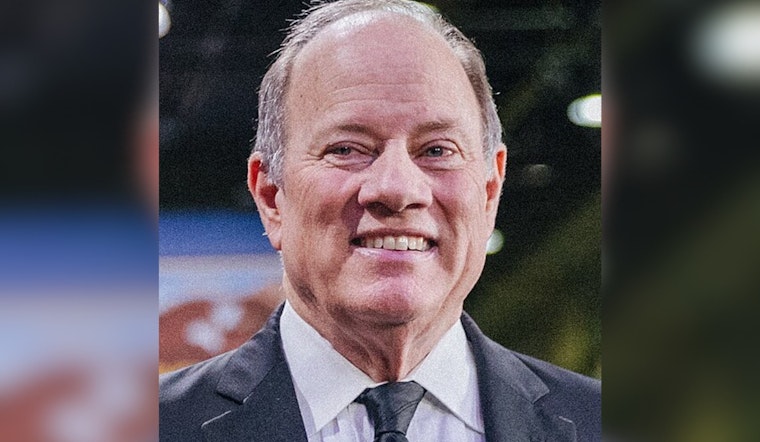
Michigan's open governor's race has morphed into a volatile three way showdown, with independent Mike Duggan, Democratic Secretary of State Jocelyn Benson and Republican Rep. John James trading leads in early polling. What once looked like a straightforward Democratic handoff from term limited Gov. Gretchen Whitmer is now being recast by pollsters and big donors as a pure tossup. With the August 4 primary and November general election still months away, the first wave of numbers is already steering campaign messages and cash across the state.
Polls show a split three-way race
A Detroit Regional Chamber survey released in late February pegged Duggan at roughly 30.1% among likely voters, John James at 28.9% and Jocelyn Benson at 28.0%, all of them packed inside the poll's margin of error. The chamber reported that Duggan performed best in several hypothetical one on one matchups, while a subset of more "definite" voters shuffled the order slightly, a reminder that even modest turnout shifts could flip the script. At this stage, the poll essentially cast the contest as deadlocked, according to the Detroit Regional Chamber.
Other surveys diverge
Other polling tells a less Duggan-centric story. Aggregators such as RealClearPolitics, which blend dozens of statewide tests, show a messy picture, with some late 2025 and early 2026 surveys giving Rep. John James a narrow edge and others putting Benson in front by a more comfortable margin. Local polling has added to the confusion rather than clearing it up, with Target Insyght/MIRS and Impact Research producing single poll snapshots that point to different frontrunners, according to reporting by Metro Times.
Why Duggan's independent bid matters
Duggan's decision to jump in as an independent scrambles the usual math. A well known metro Detroit mayor running outside the two major parties can tug moderates from both sides and force campaigns to rethink their turnout models. He has cast his bid as an answer to partisan gridlock and, to make the ballot as an independent, his operation must collect between 12,000 and 60,000 signatures from registered Michigan voters. The move has already drawn both endorsements and criticism from party leaders and business interests, according to AP News.
Key dates and what to watch
Michigan's statewide primary is set for August 4, 2026, with the general election locked in for Nov. 3, 2026. That timetable gives independents an early window to introduce a statewide message while the parties sort out their nominees. The state's elections office lists the August primary, along with candidate information and official calendars that will be updated as filings and petitions roll in, according to the Michigan Department of State. For readers tracking where the polling winds are blowing, The New York Times also maintains an interactive poll tracker that pulls together state surveys and head to head scenarios.
Bottom line
For now, uncertainty is the defining feature of this race. Poll results swing with methodology, sample and timing, and an independent like Duggan could either unify the political center or carve into the Democratic vote. Michigan has recently elected Democrats to multiple statewide offices, yet it also backed Donald Trump in 2016 and again in 2024, a swing state track record that helps explain why both parties still see the governor's office as winnable, according to AP News. Keep an eye on fundraising reports, internal polling and turnout modeling through the spring and summer to see whether the early three way dynamic survives or gives way to a more familiar two person clash, as the next batch of public surveys hints at where the electorate is actually heading.





.jpg)