

























































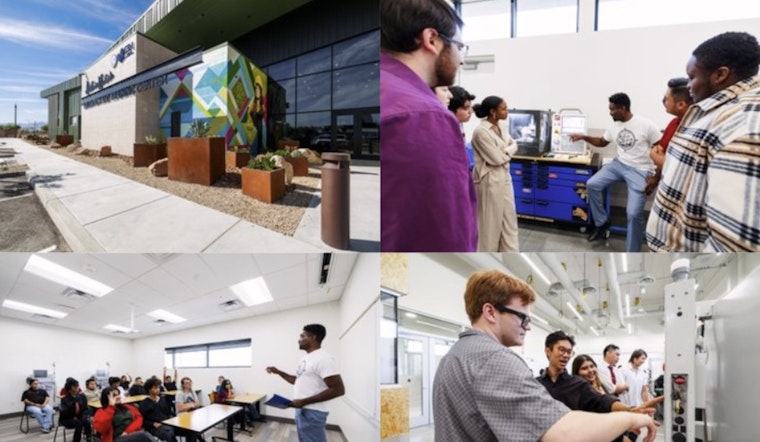
Las Vegas is doubling down on neighborhood-based job training, and this time the action is in East Las Vegas. On Wednesday, the Las Vegas City Council voted to award a design contract to Carpenter Sellers Del Gatto Architects, better known locally as CSD, for the planned East Las Vegas College of Southern Nevada Training and Development Center. The move pushes the Desert Pines redevelopment forward and edges the city closer to a workforce hub that pairs municipal investment with credential programs run by the College of Southern Nevada. The project follows the recent opening of the Historic Westside Education and Training Center, part of a broader effort to bring training facilities directly into the neighborhoods where residents live.
Council approval and the announcement
According to a post by the City of Las Vegas, council members signed off on the contract this week and instructed staff to move into the design phase with CSD. The social media announcement carried a signature from Ward 3 Councilwoman Shondra Summers-Armstrong, who has been a vocal supporter of neighborhood revitalization and workforce investment in East Las Vegas.
Site and program details
The city's FY26–30 capital improvement plan lists the East Las Vegas CSN Training Development Center as part of the Desert Pines Golf Course redevelopment. The document outlines planned programming in water-conservation management, turf and landscape maintenance, irrigation, parks and recreation, and horticulture. It shows initial allocations for design and multi-year financing that would cover planning and construction as the city partners with the College of Southern Nevada on operations. City planners describe the project as a neighborhood-scale training hub designed to create near-term job pathways that connect directly to nearby redevelopment efforts.
CSD's local track record
Carpenter Sellers Del Gatto Architects is a Las Vegas-based firm with a long list of municipal projects, including a detailed project page for the Westside Education and Training Center. Choosing a local design team continues a pattern of earlier procurements that put Westside design work in the hands of nearby firms, a strategy that supporters say speeds up community engagement and keeps some continuity from project to project. CSD's website points to prior public and higher-education buildings that line up with the scale and purpose of a neighborhood training center.
Part of a broader CSN push
The East Las Vegas selection comes as the College of Southern Nevada and the city work on a broader network of neighborhood training centers aimed at residents who face higher unemployment rates, as reported by GovTech. That reporting notes a planned Medical District training center and projects an Eastside opening around September 2027, with city funding commitments and CSN applications for federal grant support. Officials say the strategy is to connect short-term certificates to local hiring pipelines and to cut down barriers such as travel and childcare for people trying to skill up.
Next steps and timeline
With the design contract in place, CSD is expected to begin schematic design work and community outreach before the city moves into construction bidding and permitting, according to the city post. Staff are slated to return to the council as design milestones are reached and funding items are locked in. The exact start of construction will depend on future funding decisions and permit approvals, but the latest vote officially moves the project into active design. Residents can look for outreach meetings and course announcements from CSN as the center moves from concept to concrete plans.
Why this matters for East Las Vegas
City officials have framed these neighborhood centers as tools to widen access to credentialed, market-ready training in communities that need it most, according to the city's workforce development materials. The city's Workforce Development page highlights youth employment initiatives and short-term training programs that are expected to feed into the offerings at the new East Las Vegas facility. Supporters argue that putting training opportunities in the neighborhood shortens the distance from classroom to paycheck and helps tie physical redevelopment to real workforce outcomes.


