

























































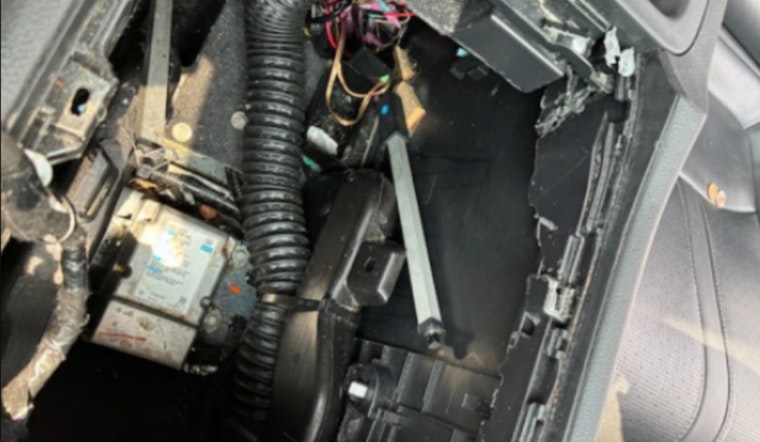
A New York man who ferried kilogram quantities of cocaine down the East Coast in a tricked-out SUV is headed to federal prison for eight years. Daryl Smith‑Winfree, 44, admitted to conspiring to distribute 500 grams or more of cocaine after authorities found kilos hidden in a secret compartment and traced deliveries into the Washington, D.C., metro area. Along the way, investigators say, the supply chain ran through parking lots in Wilmington, Delaware, and was logged in meticulous iCloud ledgers that tracked dates, quantities and customers.
The U.S. Attorney’s Office announced on April 20 that Smith‑Winfree pleaded guilty on Jan. 28, 2026, to one count of conspiracy to distribute 500 grams or more of cocaine and was sentenced to 96 months in prison, plus five years of supervised release, according to a press release from U.S. Attorney’s Office for the District of Columbia. "On multiple occasions Daryl Smith‑Winfree drove kilogram quantities of cocaine from New York to the Washington area, hiding them in his car, and kept meticulous ledgers on his phone," U.S. Attorney Jeanine Pirro said in the release.
Evidence: Parking-Lot Handoffs, K‑9 Alert And A Hidden Stash
Federal investigators tracked a series of meetups and handoffs in Wilmington parking lots, then followed physical and digital trails into the mid‑Atlantic drug market, as reported by Daily Voice. Montgomery County police stopped co‑defendant Tavon Valentine Lee in March 2025 and recovered about 257 grams of cocaine, a loaded Glock 23 and suspected counterfeit oxycodone pills. A June 3, 2025, traffic stop in Maryland led to a K‑9 alert and the discovery of three kilograms of cocaine hidden inside Smith‑Winfree’s Honda Pilot.
Digital Ledgers Tied Deliveries To Customers
When investigators pulled data from Smith‑Winfree’s iCloud account, they found detailed digital ledgers showing cocaine deliveries by date and quantity, and Smith‑Winfree admitted responsibility for at least five kilograms of cocaine, according to a press release from U.S. Attorney’s Office. Officers also searched the residence of co‑defendant Marcus DeVonta Williams and seized more than 200 grams of cocaine, drug‑distribution materials and roughly $35,000 in cash.
Charges And What’s Next
Smith‑Winfree’s guilty plea to conspiracy to distribute 500 grams or more of cocaine put him in federal territory designed for multi‑kilogram dealing. Co‑defendant Tavon Valentine Lee pleaded guilty on Jan. 30, 2026, to possessing a firearm in furtherance of a drug trafficking offense, and Marcus DeVonta Williams pleaded guilty on Feb. 4, 2026, to conspiracy to distribute 500 grams or more of cocaine; both are awaiting sentencing. The investigation involved the FBI and DEA along with the Montgomery, Howard and Arlington county police departments and was prosecuted by Assistant U.S. Attorneys Anthony Scarpelli and Michael L. Barclay.
What It Means For The Region
Prosecutors and local law enforcement say cutting off kilogram‑level suppliers is one way to slow the wholesale flow that eventually reaches neighborhood dealers and fuels violence and overdoses. For a sense of how federal cases can stack up time for regional suppliers, see Hoodline’s earlier coverage of another major prosecution: D.C. duo sentenced to 10 years. Investigators in the Smith‑Winfree case said the combination of traffic stops, K‑9 alerts and cloud forensics helped bring this particular pipeline to a close.




