

























































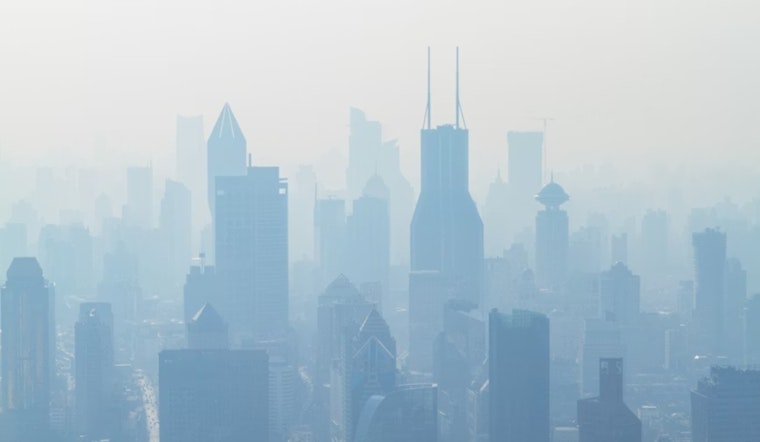
State health officials on Monday warned that ground-level ozone is expected to be elevated from Denver southward to Colorado Springs and Pueblo Monday afternoon and evening, including the adjacent foothills and the high plains. People with asthma, older adults, children and others with respiratory conditions were urged to limit prolonged or heavy outdoor exercise and move strenuous activity indoors when possible.
The advisory was posted by CDPHE, calling out elevated ozone across the I‑25 corridor and nearby plains. According to CDPHE, monitors showed variable ozone through Monday morning, with some sites reaching AQI levels in the Moderate range. The advisory specifically named Denver, Colorado Springs, and Pueblo as areas likely to see higher ozone this afternoon and evening.
National Weather Service Alert
The National Weather Service issued an Air Quality Alert that lines up with the state advisory, warning that downward mixing or intrusion of ozone from higher altitudes could push surface concentrations into the Unhealthy for Sensitive Groups range across parts of the Front Range. National Weather Service products advised that "active children and adults and people with lung disease" should "reduce prolonged or heavy outdoor exertion" while levels remain elevated.
Who Is At Risk And How To Protect Yourself
Federal guidance says children, older adults, and people with asthma or other lung diseases are most likely to suffer from elevated ozone, and even healthy people can experience breathing discomfort when ozone is high, according to AirNow. On days with elevated ozone, experts recommend moving workouts indoors, avoiding long or intense outdoor activities, and using air conditioning or filtration if available to reduce indoor exposure. If you experience coughing, chest tightness, or shortness of breath, contact a healthcare provider.
Why Ozone Is Elevated
Meteorologists say a mix of factors can boost ground-level ozone: sunny, stagnant air, smoke transport, and downward mixing of ozone-rich air from aloft. Colorado’s smoke outlook flagged transport from recent Nebraska wildfires that can interact with local emissions and help raise ozone, per the Colorado Smoke Blog. Ozone is formed when nitrogen oxides and volatile organic compounds react in sunlight, a chemistry the EPA describes as the main driver of smog.
Where To Get Updates
For live maps and forecasts, check AirNow and the National Weather Service hazard page for the latest alerts. The state’s advisory system also issues email and text notifications when ozone or smoke conditions change.





