

























































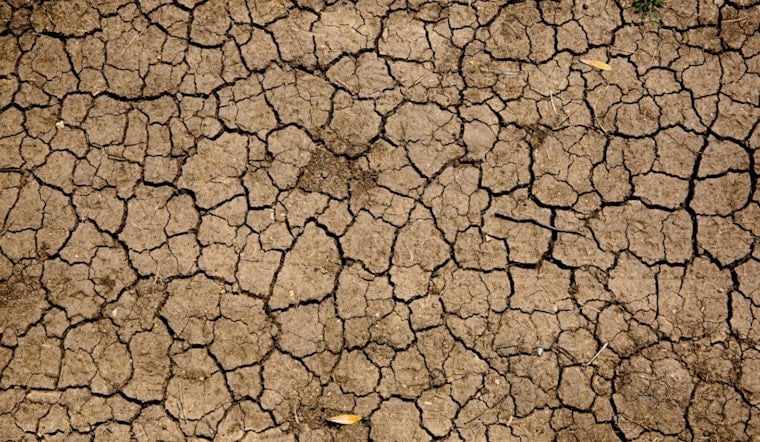
The water is nearly gone at a Broomfield golf course reservoir that normally helps manage stormwater, support wildlife and shape the landscape around the fairways. Its sudden disappearance is giving residents a stark, local view of a drought that is now stressing water systems across the Front Range.
A Tuesday video from CBS Colorado documents the stormwater reservoir at a Broomfield golf course nearly disappearing as dry conditions continue.
Plaster Reservoir Serves More Than The Golf Course
The site is Plaster Reservoir, a feature of Broomfield’s Broadlands Golf Course and open-space system. According to Broomfield’s reservoir page, it provides stormwater detention, wildlife habitat, public trail corridors and aesthetic value for nearby residents and golfers.
That makes the shrinking basin more than a cosmetic change to the course. It sits within the Quail Creek drainage basin and is part of infrastructure designed to help manage runoff, while also supporting habitat and public open space.
Broomfield’s Reuse Water System Is Under Pressure
The reservoir’s decline comes as Broomfield’s separate non-potable water system faces its own strain. In a late-July update, the City and County of Broomfield said its drinking-water supply remained sufficient for normal use, but the reuse system was under significant stress because Great Western Reservoir had received record-low inflows while demand was near historical highs.
Broomfield asked reuse-water customers, including city parks, to cut consumption by 20% immediately. The city warned that if use did not fall by mid-August, staff could recommend a formal Drought I declaration at the Aug. 25 City Council meeting.
The reuse network is separate from the potable system and supplies irrigation for roughly 940 acres of city parks plus about 1,500 acres of other landscaped properties, according to Broomfield’s water-supply information. The city says the system can address as much as 20% of overall water demand, making its stressed storage reservoirs an important part of the local conservation picture.
Broomfield Is Among Colorado’s Driest Areas
The latest Broomfield County dashboard at Drought.gov lists 100% of the county’s population as affected by drought. It also identifies January through June 2026 as the county’s 13th-driest year-to-date period in 132 years, while June ranked as the 50th driest on record.
The local conditions mirror a broader statewide emergency. CBS Colorado reported in July that 97% of the state was in drought and 80% was experiencing severe or exceptional drought, with the Colorado Climate Center describing 2026 as the hottest start to a year on record and one of the driest.
Residents Are Still Under Voluntary Conservation Rules
Broomfield remains under a Drought Watch rather than mandatory citywide drought restrictions. The city is asking residents to voluntarily limit lawn irrigation to no more than two days per week, to reduce irrigation-season water use by 5%, according to Broomfield’s drought guidance.
For now, Plaster Reservoir’s nearly empty basin is one of the clearest signs that the drought is reaching into everyday Broomfield landscapes. The city says it will continue monitoring water use, storage and supply conditions as officials weigh whether voluntary conservation will be enough to protect the system through the rest of the summer.





