

























































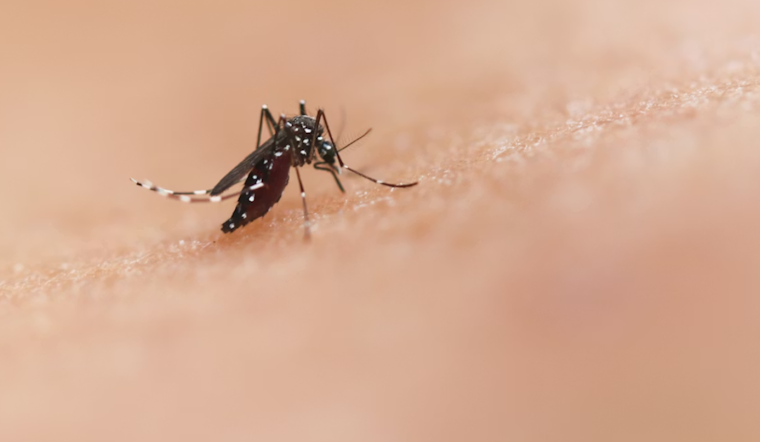
High over Merritt Island’s salt marshes, Brevard County is flying hefty treatment drones that rain down granules laced with Bacillus thuringiensis israelensis (Bti), a biological weapon aimed squarely at mosquito larvae. County officials say these unmanned aircraft let crews slip into soggy, isolated pockets that are tough or flat-out unsafe to reach by truck, boat, or manned aircraft, all while public-health teams keep an eye on elevated arbovirus activity across Florida.
Public-health backdrop
State surveillance has flagged elevated arbovirus activity in recent seasons, with numerous travel-associated dengue and chikungunya infections putting counties on alert. Arbovirus reports from the Florida Department of Health show that travel-related chikungunya and dengue cases were still turning up in early 2026, and a handful of counties have remained under mosquito-borne illness advisories. That broader backdrop is a key reason Brevard has been ramping up larval surveillance and testing out new delivery tools for tightly targeted treatments.
How the drones work
Brevard's mosquito-control director, Joseph Faella, told Florida Today the district owns four treatment drones and two inspection drones and often flies two treatment craft at once, with a pilot following along on a lift to keep visual line of sight. Faella described the largest treatment drone as roughly 15 feet across, with a payload capacity of about 227 pounds. Crews load it with Bti granules and spread them across salt marsh impoundments where mosquito larvae are likely to hatch. Officials say the biological larvicide is designed to kill mosquito larvae while posing little risk to people and many non-target species.
What residents should know
Brevard County Mosquito Control is still leaning on the basics at ground level. The agency urges residents to remove standing water, empty outdoor containers, and keep gutters clear so mosquitoes have fewer places to breed. People are also advised to limit outside activity at dawn, dusk, and early evening when mosquitoes bite most. County guidance notes that effective repellents typically contain about 35% DEET and that higher concentrations do not boost protection. Anyone noticing heavy mosquito activity is asked to call Mosquito Control so technicians can inspect and, if needed, schedule treatments.
Wildlife rules and safety checks
Merritt Island includes federal wildlife lands, and refuge rules do not exactly roll out the welcome mat for drones. Refuge regulations from the U.S. Fish & Wildlife Service note that drones and other unmanned aircraft systems are not allowed on the refuge without authorization. County officials say they coordinate treatment plans to avoid sanctuary habitats and follow FAA rules and safety protocols. Faella told Florida Today that the operations run under specific waivers and visual-line-of-sight safeguards. The county says using drones lets technicians hit problem marsh pockets while limiting broader aerial spraying when conditions allow.
What's next
Brevard officials say drone treatments will keep flying where marsh conditions, regulations, and safety reviews make them the most practical tool in the kit. Crews plan to continue publishing treatment schedules and maps as operations expand. For the latest details on where the drones are headed and how local disease activity is trending, residents can check the county Mosquito Control site or the Florida Department of Health surveillance reports.





