

























































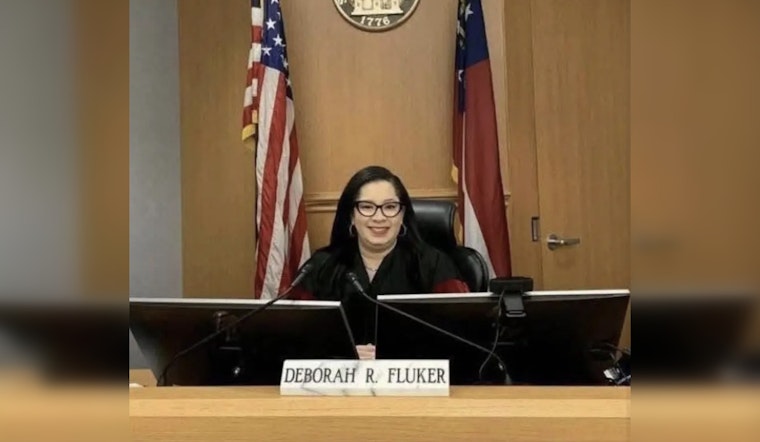
Gwinnett County is grieving the death of Superior Court Judge Deborah Fluker, who died Saturday, April 18, after a battle with cancer. A widely respected jurist and legal trailblazer, Fluker built her career in prosecutors' offices and on municipal benches across the region before ascending to the Superior Court bench. She is survived by her husband, Reginald Fluker, and two children, Adrian and Aundraya.
County confirms her passing
Fluker died Saturday after a battle with cancer, according to FOX 5 Atlanta. The station reports that Fluker, the first African American superior court judge in Gwinnett County, was first elected to the Superior Court in 2020 and won re-election in 2024. FOX 5 Atlanta also notes that funeral and memorial arrangements had not yet been announced.
From prosecutor to the bench
Before joining the Superior Court, Fluker served as an assistant district attorney in Gwinnett, DeKalb and Hall counties and previously held municipal judgeships in Suwanee and Dacula, according to BallotReady. Gwinnett County’s official court roster lists her as Division 3 of the Superior Court, with a term that ran through 2028, reflecting her 2024 re-election.
Leaders call her a trailblazer
“She brought integrity, wisdom and a fearless commitment to justice that shaped our courts and our community,” Gwinnett County Chairwoman Nicole Love Hendrickson said in a statement, FOX 5 Atlanta reported. Local lawyers and officials told the station they expect Fluker’s work to leave a lasting mark on Gwinnett’s legal community.
What comes next for her seat
Under Article VI, Section 7 of the Georgia Constitution, vacancies in judgeships are filled by appointment of the governor, and those appointees serve until a successor is elected in the next general election that is more than six months after the appointment. That provision means the governor is expected to appoint an interim replacement to serve until the next qualifying election, subject to state rules and any local procedures.




