

























































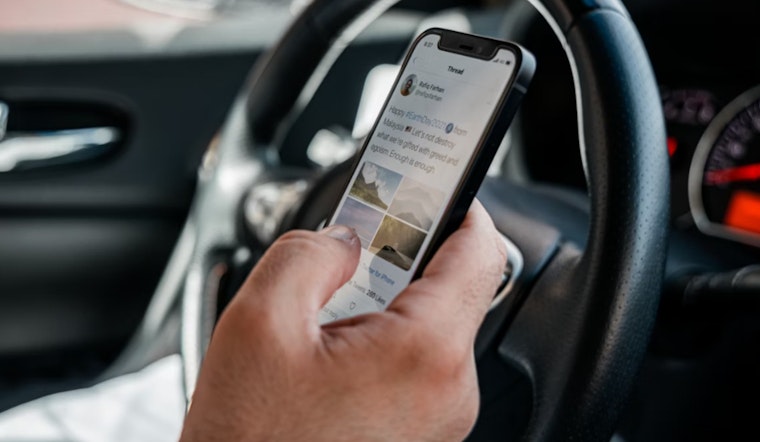
Starting June 5, 2026, Pennsylvania drivers caught holding a hand-held phone behind the wheel will not just get a lecture. Under Paul Miller's Law, the state's new hands-free statute signed by Gov. Josh Shapiro last year, the current warning-only period ends and real penalties begin. What has been a 12-month grace period since June 5, 2025 will flip to summary offenses, with a $50 fine plus court costs for each violation.
How the timeline works
According to PennDOT, the law defines an "interactive mobile device" broadly and makes hand-held use a primary offense, meaning officers can stop a driver for that behavior alone. For the first 12 months after the law took effect, officers were instructed to issue only written warnings. Starting June 5, 2026, the same behavior becomes a summary offense that carries a $50 fine, plus court costs and other fees.
The bill, Act 18 of 2024, also adds sentencing enhancements in serious crashes where device use is a factor. The full statutory language is posted by the Pennsylvania General Assembly.
Why officials pushed the law
The measure is named for Paul Miller Jr., killed in 2010 when a distracted tractor-trailer driver reportedly reached for a phone. Since then, his mother, Eileen Miller, has spent years pressing lawmakers to act. State officials point to recent crash data showing thousands of distracted-driver crashes and dozens of related fatalities in a single year as the backdrop for finally moving the bill across the finish line.
Shapiro's office says the law is not just about tickets. It also requires police to collect and report traffic-stop data to increase transparency and help guard against biased enforcement, according to the Governor's Office.
Local reaction
In central Pennsylvania, the response ranges from "about time" to "what took so long" as drivers and police get ready for tickets instead of warnings. As Fox43 reported, Nick Pigott of AAA Central Penn estimates that roughly one in five drivers on the road are distracted at any given moment. York resident Jennifer Peacey told the station she regularly sees vehicles drifting across lanes, blaming drivers glued to their screens.
Lebanon Police Chief Eric Sims offered the kind of blunt advice the statute is built around, telling reporters, "no notification is worth the risk, put your phone down," a message echoed by other law-enforcement officials.
What drivers need to know
The law still allows for emergency calls and permits hands-free systems that are physically or electronically built into a vehicle. Drivers can also pull safely off the road to use a phone, according to PennDOT. Texting while driving remains illegal, and for most non-commercial drivers the new summary offense will not add points to a driving record. Commercial drivers, however, will see the violation recorded.
PennDOT offers a Q&A and toolkits for both police and the public that spell out what is and is not allowed under Paul Miller's Law.
Legal implications
Act 18 does more than create a $50 ticket. It permits enhanced sentences in homicide by vehicle cases when prosecutors can prove distracted device use, adding real teeth in the most serious crashes. It also directs law-enforcement agencies to collect and publish traffic-stop data on race, ethnicity, age and gender.
Those provisions are written into the statute itself, and the full legislative text is available from the Pennsylvania General Assembly, which outlines the penalties and reporting rules in detail.
With the warning period ending in June, state police and safety advocates say they plan to keep pairing enforcement with public education, but the bottom line is simple: put the phone out of reach before you drive. Once the $50 fines kick in, officers across Pennsylvania are expected to start writing citations for drivers caught with a hand-held phone in traffic.





