

























































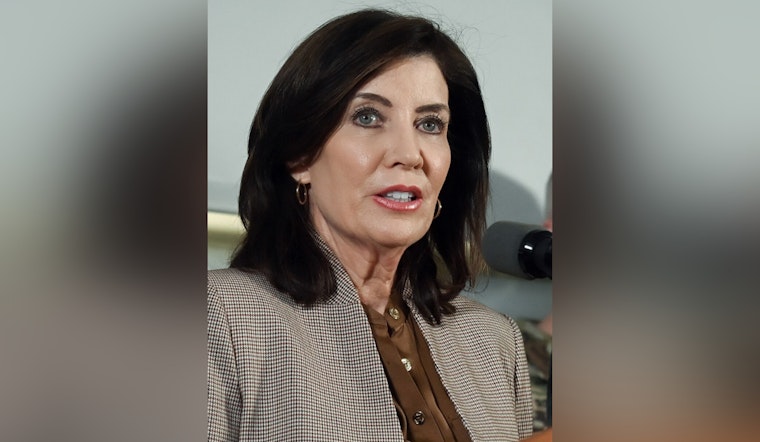
Gov. Kathy Hochul is banking on employers and the state insurance marketplace to catch hundreds of thousands of New Yorkers set to lose their zero-premium Essential Plan coverage this summer. Because federal officials signed off on shifting the program back to its original Basic Health Program rules, roughly 450,000 people in the expanded 200–250% federal-poverty-level band will no longer qualify as of July 1. The looming cutoff has kicked off a last-minute scramble in Albany as officials and advocates hunt for backup plans before notices hit mailboxes.
Federal approval and the numbers
The Centers for Medicare and Medicaid Services signed New York’s request on March 23 to terminate its Section 1332 waiver and move the Essential Plan back under Basic Health Program authority. That decision keeps coverage in place for about 1.3 million people but strips eligibility for roughly 450,000 enrollees between 200% and 250% of the federal poverty level beginning July 1. State officials say affected consumers will get 90 days’ advance notice and that NY State of Health will open a special enrollment period and ramp up outreach to help people shop for Qualified Health Plans, according to NY State of Health. They have pointed to changes in federal budget rules as the reason the waiver had to go.
Hochul’s fallback: employers and the marketplace
With that coverage cliff approaching, Hochul has floated a backup: have large employers and the NY State of Health marketplace pick up people pushed out of the Essential Plan, an idea first detailed by Crain's New York Business. Her office has cast the strategy as a market-based bridge while Albany weighs whether to deploy state funds. Advocates counter that the plan offloads the problem onto workers and businesses that may have little room in their budgets for higher premiums.
Lawmakers and advocates push for a state fix
At the Capitol, lawmakers and health advocates are pressing for a state-funded patch instead. They have rolled out bills and held rallies urging Albany to tap budget dollars to keep everyone covered while leaders argue over a longer-term solution, according to reporting from City & State New York. Price tags for a full backstop range from the low hundreds of millions to several billion dollars, and the fight over who should pay has turned any permanent fix into a heavy political lift in budget talks.
Why employers aren’t a realistic safety net
Policy analysts are skeptical that employers can fill the gap for most people about to lose coverage. The population added under the Essential Plan expansion is largely low-wage, and many work for small businesses that do not offer affordable family plans. Even single coverage through an employer can be expensive relative to paychecks, according to the Fiscal Policy Institute. FPI warns that marketplace plans, even with subsidies, could still stick many households with sizable monthly premiums and high deductibles, raising the risk that some will end up uninsured.
What enrollees should do now
The state says it sent notices on April 1 and will provide extra enrollment support, including a special enrollment window and in-person assisters, so consumers can review and choose Qualified Health Plans in time, according to NY State of Health. People who need specific doctors or medications are being urged to check provider networks and drug formularies as soon as possible to avoid nasty surprises when the changes kick in on July 1.
The political stakes
The rollback has quickly become a high-profile fault line in Albany’s budget fight, with advocates pushing hard for a state-funded safety net and Hochul weighing whether to plug the hole with one-time money or let her market-based approach play out, City & State reports. The outcome of the next few weeks of negotiations will decide whether hundreds of thousands of New Yorkers hang onto low-cost coverage, shift to more expensive marketplace plans, or face the prospect of losing health insurance entirely on July 1.





