

























































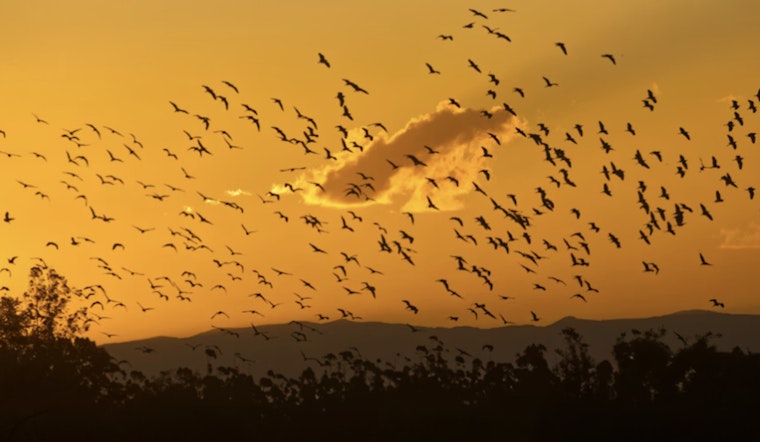
Houston's weather radar briefly lit up Wednesday night, not with storms but with wildlife. Instead of rain bands, the screens showed swirls that turned out to be thousands of bats taking off from bridge roosts just after sunset, a classic pattern meteorologists recognize as animal emergences. The eye-catching returns made for an unusual sight on the evening forecast and plenty of double takes around the city.
KHOU chief meteorologist David Paul said the radar briefly captured thousands of bats lifting off from roosts across Houston, with the most intense signatures popping up under the Waugh Drive Bridge and near the I-45 and US-90 interchange, as reported by KHOU. The station also noted similar returns on radar near San Antonio around the same time, a sign that multiple large colonies took to the air in unison.
Why weather radar 'sees' animal swarms
Weather radar is designed to spot raindrops, but it can also detect biological scatterers when huge numbers of animals move together. Radar guidance from NOAA explains that birds, bats and insects regularly appear on NEXRAD displays in clear-air conditions. Under the right setup, including temperature inversions and the combined footprint of thousands of animals, the radar can paint circular echoes that expand and fade as the flying mass spreads out, according to the NOAA Radar Operations Center.
How big are the colonies?
Houston's most famous urban bat roost is tucked beneath the Waugh Drive Bridge over Buffalo Bayou, where Texas Parks & Wildlife estimates about 250,000 Mexican free-tailed bats spend their days. The agency notes that the colony usually stays inside the bridge when sunset temperatures dip near 50°F. Farther west near San Antonio, Bracken Cave holds millions of bats at peak season, a colony so massive it can consume tens to hundreds of tons of insects in a single night, the Houston Chronicle reports.
Where to watch and what to expect
For those who prefer watching bats to watching radar, Buffalo Bayou Partnership and volunteer groups host bat-watch events and boat cruises that line up with the nightly flyout. They urge visitors to stick to designated viewing areas and platforms, and to avoid disturbing the animals, according to the Buffalo Bayou Partnership. The timing is never guaranteed, and cool or rainy evenings often keep the colony tucked under the bridge instead of streaming out into the night.
For meteorologists this kind of radar capture is a rare crossover moment, where a weather tool turns into a wildlife spotlight. For biologists it is a high-tech reminder of just how many insects these colonies help keep in check. Radar snapshots like Wednesday's showcase a city ecosystem powered by both science and spectacle, according to the Houston Chronicle.





