

























































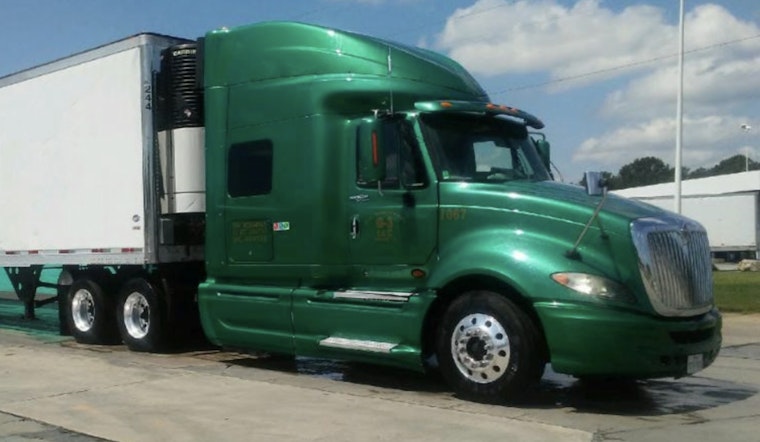
City officials fanned out across the Hunts Point Produce Market on Wednesday with a rare bit of good news for the South Bronx: $15 million in congestion-pricing revenue is headed to the market to swap out dirty diesel transport refrigeration units for cleaner hybrid models. The money is billed as a quick public-health win that aims to cut diesel pollution and asthma triggers in one of the city's hardest-hit neighborhoods.
Officials said the $15 million will pay to replace stationary refrigerated generators, known as TRUs, that line the market's loading docks, as reported by News 12 New York. The allocation is one of the place-based mitigation measures laid out in the congestion-pricing Final Environmental Assessment and described by the governor's office, drawing on toll revenues that were set aside to offset disproportionate environmental burdens.
According to a New York City DOT TRU-program brochure, the Hunts Point market leans on nearly 1,000 stationary refrigerated trailers that run day and night, turning them into a tightly packed source of fine-particulate and NOx pollution for surrounding blocks. DOT materials note that earlier incentive rounds already swapped out dozens of the oldest engines and that moving to hybrid or electric technologies delivers measurable local emissions cuts.
"Replacing just one of these units avoids the particulate matter, the emissions of 330 truck trips per day on the Cross Bronx Expressway," MTA Chair and CEO Janno Lieber said at the event. Officials told reporters the city has already replaced 20 units and plans to swap more than 70 additional TRUs this year, according to News 12 New York. Lieber and other supporters pitched the upgrades as a fast, high-leverage way to trim concentrated pollution while slower, big-ticket infrastructure changes grind forward. Market operators and health advocates have pushed for exactly this kind of targeted spending for years, pointing to the neighborhood's stubbornly high asthma rates.
What the mitigation package includes
The mitigation package tied to congestion pricing does not stop at TRUs. It also reserves money for asthma case management and a Bronx asthma center, more electric-truck charging infrastructure, and new greenspace and roadside vegetation meant to soften the impact of nearby highways, as outlined by the governor's office. The Final EA and related MTA tables list the TRU line item alongside roughly $125 million in regional and place-based measures that aim to cut truck emissions in communities that bear the brunt of traffic. Officials say the mix is designed to pair immediate pollution reductions with longer-term investments in cleaner freight and safer, healthier streets.
Legal and oversight context
The mitigation promises, including the $15 million set aside for TRUs, are baked into the congestion-pricing Final Environmental Assessment and cited in court filings, which makes them part of the formal mitigation record, according to court documents. Those filings show the program's sponsors agreed to place-based measures at Hunts Point specifically to address disproportionate health impacts in environmental-justice census tracts. Because the commitments live in the EA and related court materials, implementation and monitoring will be tracked through the program's compliance process.
For nearby residents, the most tangible shift will be cleaner air on the blocks around the market. For the market itself, the TRU replacements are one more step in a years-long modernization effort that city agencies and redevelopment partners have been pressing. Officials said the new units will be prioritized where they cut exposure the fastest and that follow-up monitoring will guide what comes next. Community groups, well accustomed to waiting on promised fixes, say they will keep a close eye on how the first wave of work unfolds this year.





