

























































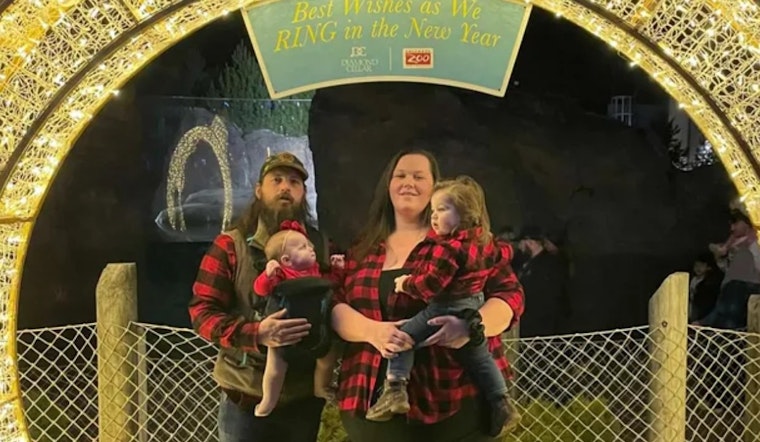
A Hocking Hills park maintenance worker who nearly died after a fallen tree pierced his neck is now back on his feet and walking. Philip Pohle, 32, a father of two, recalls the impact leaving him stunned, saying “that sucker hit me hard,” as he feared he might never see his children again. After emergency surgery and weeks in hospital care, Pohle is now putting his energy into a message about family, perspective and gratitude.
How the accident unfolded
Pohle was clearing downed trees at Hocking Hills State Park on March 13 when his foot became stuck on the gas pedal of a front loader and a six- to eight-inch branch was driven into his neck, pushing his skull away from his spine. Coworkers braced his neck, sawed through the remaining tree and kept him stable while first responders worked to free him. An ambulance was about 20 minutes out, and weather conditions kept a medical helicopter grounded, according to coverage of the case that drew on WBNS body-camera footage and interviews with those on scene. WNEM.
Emergency surgery at Grant Medical Center
Pohle was taken to OhioHealth Grant Medical Center in Columbus, where surgeons used plates, screws and rods to stabilize the occiput to the cervical spine in what doctors described as an extraordinary reconstruction. “About 50% of the patients with this kind of injury die at the scene, so of the other 50% who make it to the hospital, a significant amount of those are paralyzed,” neurosurgeon Dr. Victor Awuor told local reporters while outlining the risks and the surgical effort. Physicians had feared he might not survive or walk again, yet Pohle is now moving unassisted, according to that reporting. WNEM.
Why survival is unusual
The injury, medically called atlanto-occipital dislocation or AOD and often referred to as “internal decapitation,” has historically carried a high immediate mortality rate because it can disrupt the brainstem and major blood vessels. Modern reviews of the trauma literature note that survival is increasingly possible with rapid field stabilization, prompt transport to a trauma center and timely surgical fixation, although outcomes still vary widely and many survivors face long recoveries. A comprehensive analysis of case series outlines these outcomes and current management approaches. International Journal of Spine Surgery.
Family, fundraising and recovery
Pohle and his partner share two small children, and a fundraiser set up by a friend lists details of the March 13 injury and the family’s mounting expenses. The GoFundMe had raised thousands toward a $30,000 goal. The organizer wrote that Pohle was first taken to a local hospital and then transferred to Grant, where he has been receiving definitive care, with those details drawn from the fundraiser and local reporting. GoFundMe.
Pohle told reporters he thought of his children while he was trapped and now has a simple ask: “Love deeply and have a grace with people. Be patient, be kind. Tomorrow is not guaranteed,” he said, as he focuses on rehab and a hoped-for return to work. Local outlets that covered his interview and the hospital team have called his recovery remarkable, and his case is circulating as an example of how fast field care and surgical stabilization can change an outcome once considered almost always fatal.



