

























































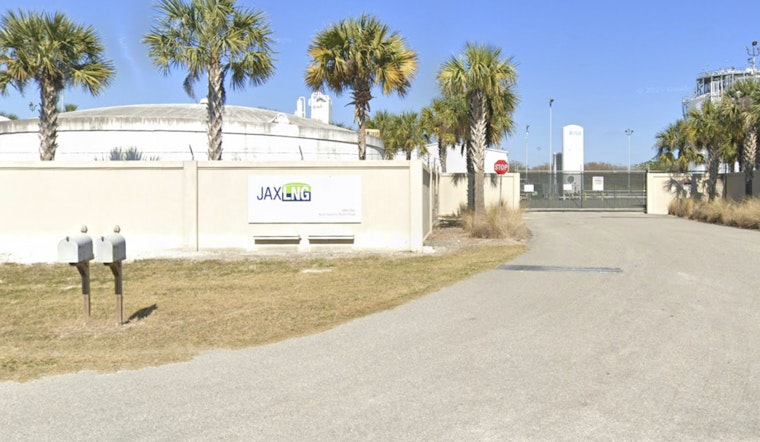
Jacksonville’s JAX LNG is quietly sketching out a much bigger role in the fuel game, eyeing cruise ships, cargo carriers and even rocket launches as customers as demand ticks up for cleaner alternative fuels. Company managers told local reporters they are exploring ways to move more LNG into Caribbean cruise itineraries and to support aerospace and other transportation sectors. Any expansion would build on years of local bunkering work and on a recent federal rule change that opened the door wider for ship-to-ship transfers.
Facility capacity and customers
The Dames Point plant already ships LNG by both vessel and truck, with a liquefaction capacity of about 360,000 gallons per day and roughly 4 million gallons of on-site storage, according to JAX LNG. The company lists maritime and trucking as core markets and highlights TOTE Maritime Puerto Rico’s dual-fuel container ships as a long-term customer. That mix of marine and over-the-road loading gives JAX LNG the flexibility to serve cruise ships, cargo lines and industrial users across the Southeast without having to bet everything on one sector.
Policy shift and new bunkering work
A key federal rule tweak set the stage for the latest plans. In a Feb. 28, 2025 order, regulators narrowed Department of Energy oversight of ship-to-ship LNG transfers, clearing a regulatory path for expanded bunkering operations, according to the Department of Energy. Since that decision, JAX LNG and its partners have used Jones Act bunker barges to serve calls at Port Canaveral and other Southeast ports, including supplying Royal Caribbean’s Star of the Seas in August 2025, as reported by Cruise Industry News. Industry trade outlets say that mix of regulatory clarity and fresh barge capacity has made coastal bunkering pencil out again.
Local economic stakes
City leaders are already on the hook for helping JAX LNG grow. Jacksonville’s City Council approved a property tax incentive capped at $5.3 million for a roughly $113 million Dames Point expansion that aimed to boost liquefaction and storage and add a small number of jobs. The deal and related permits surfaced in 2022 reporting by the Jax Daily Record. Port officials, for their part, have been clear they see bunkering as a strategic growth play for cargo and cruise traffic, according to materials from JAXPORT.
Company outlook and next steps
In an interview published April 15, 2026, the Jacksonville Business Journal reported that JAX LNG’s business manager said the company is weighing expanded service into Caribbean cruise lanes along with other transportation segments, including aerospace support. Executives say they will factor in barge availability, partnerships and supply logistics before deciding whether to boost liquefaction and storage at Dames Point or to lean harder on deliveries by barge and truck, a choice that tracks with the company’s operations overview at JAX LNG. For Jacksonville, the math is as much about cementing status as a regional fuel hub as it is about a modest number of new jobs and added marine traffic.
Industry forecasts help explain the timing. The Department of Energy has cited an IEA estimate that LNG-fueled vessels could nearly double and top 1,200 by 2028, which would drive demand for more bunkering infrastructure, according to the Department of Energy. Exact timelines for any new construction, permits or added storage at Dames Point are still up in the air, but Jacksonville’s port footprint and fuel network leave the city well positioned to grab a larger share of that market if demand holds and the right partners line up.





