

























































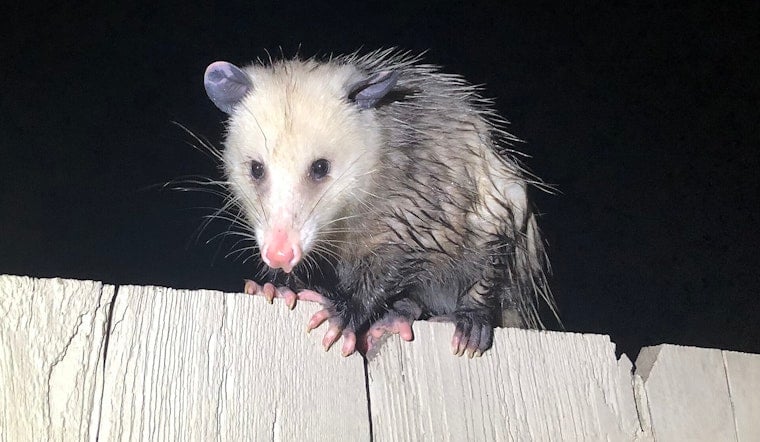
In Key Largo this spring, wildlife crews started turning local opossums into unlikely scouts, slipping lightweight tracking collars around their necks and releasing them back into the mangrove thickets. The animals are not meant as bait so much as moving blips on a map. When a Burmese python swallows a collared opossum, the transmitter can keep broadcasting, dropping a rare breadcrumb trail into dense cover where people almost never spot the snakes. Managers say the small pilot is now being scaled up as a pragmatic way to track down and remove breeding-sized pythons that are reshaping South Florida’s food web.
As reported by the Miami Herald, the technique was stumbled on in 2022, when researchers tracking small-mammal movement realized one of their study animals had ended up inside a python. The team includes A.J. Sanjar and Michael Cove, working with Crocodile Lake National Wildlife Refuge manager Jeremy Dixon, who helped turn that one-off surprise into a targeted removal tool. According to the Herald, collars that survive a python’s gut can guide trackers straight to resting snakes for humane removal.
How collared opossums lead trackers to pythons
Researchers hope to have at least 40 collared opossums in the field by late summer and say they have already tagged about 32 animals during testing, according to reporting. The team now often relies on lower-cost VHF collars that emit a mortality alert if the wearer stays immobile for several hours; that signal lets crews home in on a likely python hangout, according to reporting by USA TODAY. Field notes and an abstract by project researchers indicate the method has already helped remove multiple large pythons during test seasons.
Why researchers say it matters
The size of the python problem is no longer in doubt. Federal scientists and peer-reviewed studies have documented how invasive Burmese pythons have driven dramatic declines in medium-sized mammals across parts of the Everglades. The U.S. Geological Survey points to a landmark study showing steep drops in sightings of raccoons, opossums and bobcats in core python territory, and it notes the first documented wild python in the Everglades back in 1979. That ecological track record is why managers are now testing every feasible detection tool they can get their hands on.
Where this fits in Florida’s python fight
Nonprofit and state crews have already ramped up removal tactics. The Conservancy of Southwest Florida reported a record season in which teams hauled out 6,300 pounds of pythons, part of more than 20 tons removed from a roughly 200-square-mile area since 2013. High-profile catches, including a 215-pound, nearly 18-foot female described in coverage by National Geographic and a measured 19-foot specimen in 2023, underline why crews see new detection tricks as worth trying. Those efforts run alongside citizen reports and incentive-based events that keep steady pressure on the population.
Officials, ethics and next steps
Some critics argue that using wild prey as indirect trackers risks crossing an ethical line, but refuge staff counter that the collars are simply recording an interaction that is already happening in the marsh. As the Miami Herald reports, Crocodile Lake manager Jeremy Dixon told reporters, "We’re not putting these animals out there and in harm’s way; harm’s way is there. We’re just documenting what’s happening." Project leaders emphasize that collared opossums are released where they were captured and that the team plans broader habitat trials before any move to a larger-scale rollout.
Managers say no single tactic will solve Florida’s python problem, but collared opossums add a quietly effective tool to the kit, helping find some of the very largest, most reproductively important snakes. The state continues to combine contractor removals, public reporting and incentive programs like the Florida Python Challenge, according to the Florida Fish and Wildlife Conservation Commission, while researchers test whether this prey-based tracking strategy can be scaled beyond the Keys.





.jpg)