

























































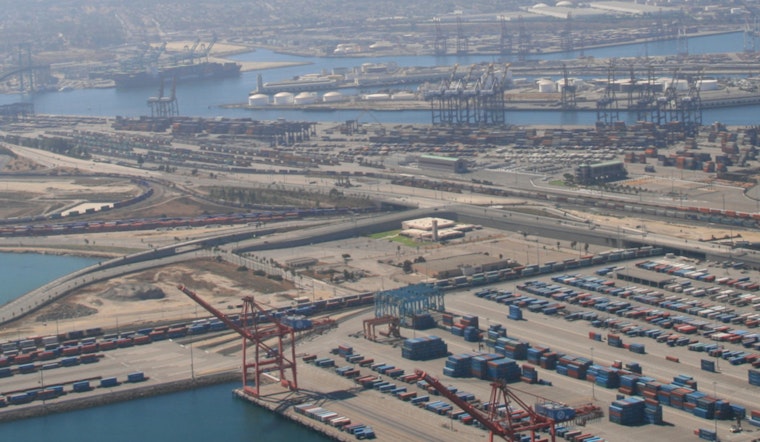
Exports through the Port of Los Angeles climbed in March even as shipping turmoil in the Middle East pushed fuel and freight costs higher worldwide. Loaded export containers totaled about 132,000 for the month, a 7 percent jump from March 2025, while overall container traffic was slightly lower year over year. Port leaders framed the March numbers as a sign that export businesses and the waterfront workforce remain resilient amid global disruption.
At a media briefing, Port of Los Angeles Executive Director Gene Seroka called March throughput “solid,” noting the port processed 752,520 TEUs in March, a 3 percent decline from last year that he said was driven in part by front loading in 2025. Loaded exports reached 132,129 TEUs, loaded imports were 380,733 TEUs, and empty units totaled 239,658 for the month. Per the Port of Los Angeles, the export tally is the highest monthly outbound container count since May 2024.
Industry observers say the port’s focus on trans Pacific routes, along with strong trade ties with East Asia, has helped blunt near-term fallout from Gulf and Red Sea disruptions. “The transpacific business is the most lucrative of any east west [trade] for the service providers and shipping lines,” Seroka told reporters, a point picked up in local coverage. For a local roundup and context, see reporting from LAist.
What The Numbers Show
The port’s facts card for calendar year 2025 puts cargo value at roughly $301 billion and lists China/Hong Kong, Vietnam, Japan, South Korea, and Taiwan as the top trading partners by value. Imports through the Port of Los Angeles were led by furniture, auto parts, plastics, apparel and electronics, while exports included recyclable paper, pet and animal feed, soybeans, recyclable metal, and automobiles. As outlined by the Port of Los Angeles, that commodity mix helps explain why outbound tonnage can rise even when some imports soften.
Shipping Costs And The Middle East Disruption
Those export gains arrived while carriers and shippers grapple with higher fuel bills and longer voyages after the Iran centered conflict disrupted Gulf and Red Sea routes. Major lines have added emergency bunker and contingency surcharges. Maersk, for example, announced a global Emergency Bunker Surcharge in March as it redistributed fuel supplies and covered higher costs, and many services are routing around the Cape of Good Hope, adding days and fuel to voyages. The World Trade Organization has warned that the Middle East conflict could trim world trade growth and add further pressure to shipping and energy costs, and the combination of surcharges and longer sailings is likely to show up in logistics bills down the chain, according to Maersk and the WTO.
Why This Matters For Los Angeles
The Port of Los Angeles and the wider San Pedro Bay complex are a major local economic engine. The port supported roughly 126,000 jobs in the city and handled about 6.7 million loaded TEUs in 2025, giving the waterfront an outsized role in regional supply chains. If surcharges and rerouting persist, exporters, including those in agriculture and recycling that showed strength in March, could face higher logistics costs that filter through to local warehouses, trucking firms and retailers. Port leaders say their immediate focus is keeping terminals flowing and costs predictable for shippers while they monitor global fuel and route developments, according to the Port of Los Angeles.
For now, the port points to March’s export gain as evidence of resilience, but executives and industry watchers will be watching April’s numbers and carrier advisories to see whether the uptick becomes a sustained trend. The next wave of data and any changes to carrier surcharges will be key indicators for local businesses that rely on predictable ocean freight.





