

























































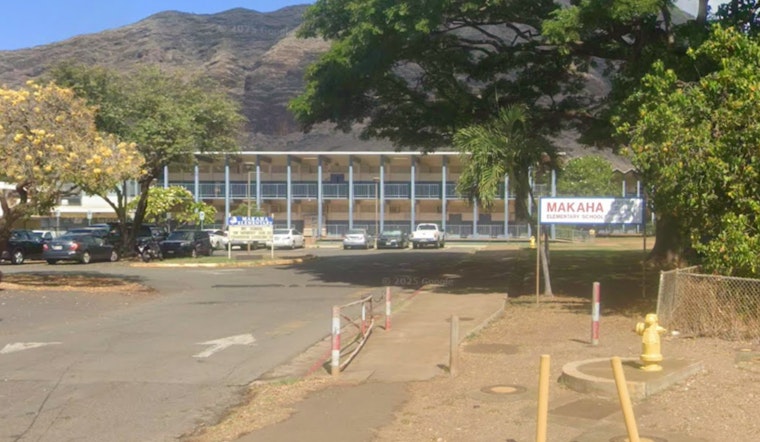
Ready Keiki’s classroom rollout just hit a major milestone on the leeward coast: every elementary school in the Nānākuli–Waiʻanae complex now has a free public pre‑kindergarten classroom, following the latest opening at Mākaha Elementary. Lieutenant Governor Sylvia Luke toured the new site alongside Department of Education Superintendent Keith Hayashi and EOEL Director Yuuko Arikawa‑Cross, calling the expansion a win for keiki and for working ʻohana. State officials also used the visit to unveil Hawaiʻi’s new Early Childhood State Plan (2025–2030), which maps out the next five years of growth.
Luke framed the rollout as a key step in a broader push to ease child‑care costs for families, noting that the state has already reached full pre‑K coverage in the Hāna‑Lahainaluna‑Lānaʻi‑Molokai complex and is making progress on Kauaʻi. According to the Office of the Governor, the Mākaha classroom visit included Hayashi and Arikawa‑Cross, and officials said the new room serves 3‑ and 4‑year‑olds with enrollment offered year‑round.
State data show the Ready Keiki initiative has been steadily scaling up since its January 2023 launch. The Executive Office on Early Learning currently lists 117 EOEL public pre‑K classrooms across 89 sites statewide, up from 37 in 2022, according to the Executive Office on Early Learning. Each EOEL classroom can serve up to 20 students, with priority given to children in foster care, families experiencing homelessness and other at‑risk groups. Applications for the 2026–27 school year are being accepted on a rolling basis.
What the 2025–2030 State Plan Lays Out
The Hawaiʻi Early Childhood State Plan (2025–2030) outlines six focus areas: keiki and ʻohana health and safety; ʻohana partnerships and engagement; keiki learning and development; the early childhood workforce; access to early care and learning; and early childhood systems. It also emphasizes Hawaiian‑language and cultural instruction as core priorities. The plan builds on the 2019–2024 roadmap and the 2024 comprehensive needs assessment, and state officials say the planning process drew input from more than 150 in‑person forum participants and over 300 contributors via surveys and virtual sessions. Maui Now reported on both the plan’s release and the community engagement behind it.
How Families Sign Up and Who Gets Priority
Families can apply for a seat or join a waitlist online at earlylearning.ehawaii.gov or by calling EOEL at (808) 784‑5350. The EOEL public pre‑K program serves 3‑ and 4‑year‑olds and follows the same calendar as public elementary schools, and seats are typically filled regionally on a rolling basis. Officials say the next phase of Ready Keiki will bring additional classrooms online over the next two years to meet demand and expand access across the islands.
Why This Matters for Families and the Workforce
State leaders cast Ready Keiki as both an early education investment and a practical way to cut child‑care costs for working ʻohana while smoothing the transition into kindergarten. Recent reporting and policy moves have widened preschool subsidy eligibility and set funding and classroom targets aimed at reaching universal access by 2032, benchmarks that researchers and advocates are tracking closely. For more on the program’s pace and long‑term goals, see reporting from Hawaiʻi Public Radio and analysis from the National Institute for Early Education Research.
EOEL says it will track progress under the new state plan every year and keep working with partners as classrooms open. The Mākaha launch and the plan announcement were both covered by Maui Now, and families are encouraged to check the EOEL site for the latest on openings and enrollment.





