

























































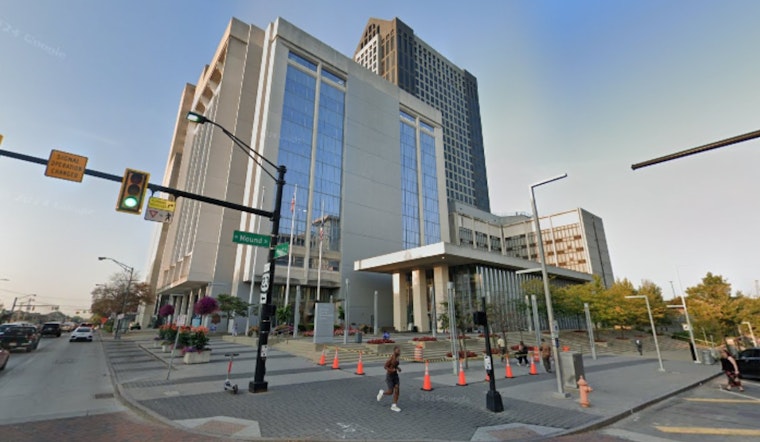
On March 31, the Ohio 10th District Court of Appeals threw out most of the January 2024 convictions of Justus Robertson, finding that jurors saw him in leg restraints during trial and that the visible shackling likely undercut the fairness of the case. The panel sent six of seven charges back to Franklin County Common Pleas Court and vacated a sentence that required at least 29 years before parole eligibility, while one murder count remains in place. Court records show no new trial date has been set.
The majority opinion, authored by Judge Carly Edelstein and joined by Judges Kristin Boggs and Michael Mentel, zeroed in on the shackling issue and concluded it justified reversal. The judges found the record did not establish that visible restraints were necessary for security, and the opinion states that the leg restraints "could have caused the jury to question his credibility." As reported by The Columbus Dispatch, the appeals court tossed Robertson's January 2024 convictions for aggravated murder and related counts and sent most of the case back for a possible retrial. The Dispatch also noted that the trial transcript shows Franklin County Common Pleas Judge Mark Serrott allowed Robertson to enter the courtroom wearing leg restraints.
What the court said
In the written opinion, Edelstein focused on how seeing a defendant in restraints can tilt a jury's perception. The panel pointed out that nothing in the record showed shackling was required for Robertson specifically, yet jurors still saw his leg restraints. The opinion emphasizes that such a visual could undermine Robertson's credibility in the jurors' eyes, which the court deemed serious enough to reverse several counts and wipe out the lengthy sentence that followed. The Columbus Dispatch reported on the opinion and the underlying courtroom record.
Case background
The case stems from a July 7, 2022, shooting that left 21-year-old Christopher Roberts Jr. dead after an exchange of gunfire at an apartment complex, according to the Franklin County Prosecutor's Office. Court and law enforcement records cited in the prosecutor's release state that the firefight followed a dispute involving the theft of firearms and drugs, and that multiple people fired shots, with gunfire also striking a nearby home. The prosecutor's office previously announced Robertson's January 2024 conviction and a sentence of 29 years to life, a result that the appeals court ruling has now largely unraveled.
Legal implications
Visible shackling has long been treated as inherently prejudicial in American courts, and the U.S. Supreme Court has warned that restraints visible to jurors are allowed only when the state shows a specific, essential security need for that particular defendant. That principle comes from the high court's 2005 decision in Deck v. Missouri, summarized by Oyez. The Robertson decision tracks that precedent and leaves prosecutors with a choice: retry the counts that were sent back or seek review in the Ohio Supreme Court.
What's next
For now, the case returns to Franklin County Common Pleas Court for preliminary proceedings on the counts cleared for potential retrial. Prosecutors can ask the trial court to move forward again on those charges or pursue further appellate review, while the defense can push for dismissal or additional hearings on whether restraints were ever justified. Robertson is now 22; he was 19 at the time of his 2024 trial.





