

























































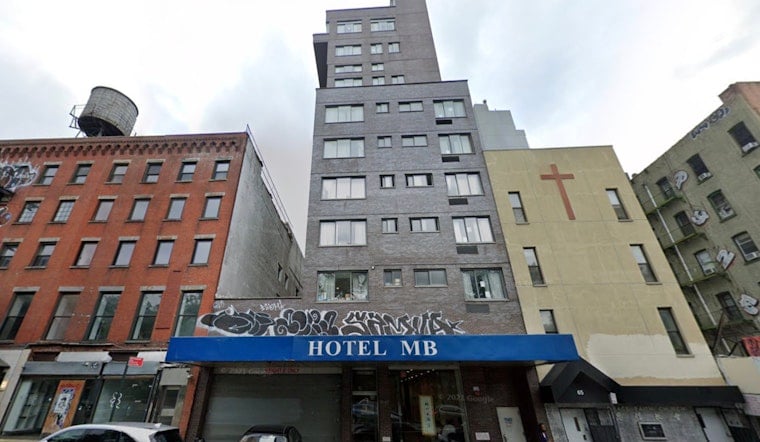
Neighbors on Manhattan’s Lower East Side say they were blindsided to learn that a former boutique hotel now operating as a city shelter at 61 Chrystie St. is still housing multiple registered sex offenders just steps from the Hester Street playground in Sarah D. Roosevelt Park. The discovery has parents and community leaders demanding answers about how those placements were made and whether residency rules are actually being enforced. A nearby men’s shelter at 197 Bowery - known locally as The Andrews - has also been flagged as housing registered offenders, turning unease into full-blown neighborhood alarm.
According to the New York Post, the Chrystie Street site - once Hotel MB - lists at least five level‑2 and level‑3 registrants. The outlet identified several individuals with prior convictions for sexual violence. The same reporting says The Andrews at 197 Bowery is currently housing six registrants and quotes parents who say they will steer clear of the park this summer because they do not feel it is safe for their children.
Who runs the Bowery shelter
Breaking Ground’s 2023 audited financial statements identify 197 Bowery as “The Andrews,” described as a Safe Haven that offers emergency shelter and social services to people transitioning from homelessness, confirming that the nonprofit operates the site. The filings state that the building is part of Breaking Ground’s housing portfolio, while stopping short of listing any specific residents or guests. Taken together, those documents form the public paper trail pointing to the organization responsible for services at the Bowery location.
What the law allows - and what it doesn’t
New York State’s Sexual Assault Reform Act (SARA) includes residency restrictions for certain registrants, including a 1,000‑foot rule tied to school grounds. At the same time, New York City’s right‑to‑shelter mandate and a series of court rulings have created a legal tightrope for city agencies. A New York Court of Appeals opinion and related case law spell out why the Department of Homeless Services (DHS) sometimes must provide shelter placements even while SARA compliance is still being sorted out. For additional context, see the NYC Department of Homeless Services. Advocates and courts alike have repeatedly noted that resolving this tension would likely require changes by lawmakers or regulators rather than a quick operational fix by DHS or any single provider.
City response and community reaction
The city’s Department of Social Services told the New York Post that it “follows the law” and provides shelter in line with New York City’s right‑to‑shelter obligations. The Post also reports that Breaking Ground directed questions about who lives at The Andrews to DHS and to the NYPD’s Special Victims Unit. Community Board 3 members and local parents quoted in the coverage say they feel sidelined by decision‑makers at City Hall and in the agency world. One parent told reporters she is “still in a state of shock,” while another said she plans to keep her children away from neighborhood playgrounds.
Elected officials and neighborhood groups, meanwhile, are pressing for clearer notification rules and more transparent criteria for placing registrants in facilities near parks and schools. They say the current system leaves families scrambling to find out who is actually living in buildings that have quietly shifted from hotels to shelters.
What neighbors want and what to watch for
Residents say they want faster notice when registered offenders are placed nearby, clearer rules around where registrants can be housed, and site‑specific safety measures that might include more staff on site or supervised access near parks and playgrounds. Legal experts caution that any meaningful overhaul will likely require action by state lawmakers or new administrative rules to reconcile SARA’s limits with the city’s obligation to provide shelter to people who would otherwise be on the street.
In the short term, neighbors say they plan to push hard for meetings with DHS, Breaking Ground and local elected officials. On their wish list: more transparency, a public explanation of how placement decisions are made and concrete safeguards for children who use Sarah D. Roosevelt Park and other nearby play spaces.





