

























































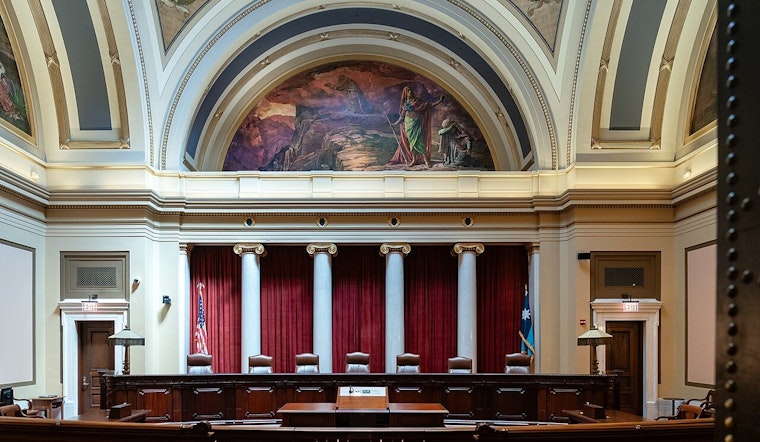
Minnesota’s highest court has thrown out a second-degree murder conviction after ruling that a controversial “geofence” warrant used to tap Google location data was too broad under the state constitution. In a decision released April 15, 2026, the Minnesota Supreme Court reversed the conviction tied to the 2021 killing of Manuel Mandujano and sent the case back to the lower courts to figure out what happens next.
What the court ruled
The court held that people have a reasonable expectation of privacy in their Google location history and that pulling those records counts as a search under Article I, Section 10 of the Minnesota Constitution. The majority did not ban geofence warrants outright, but it said this one crossed the line by giving police “unchecked discretion” to widen their hunt, making the warrant not specific enough, according to the Minnesota Supreme Court.
How the geofence was used
During the 2021 investigation, officers asked Google to cough up location records for devices inside a roughly 65-by-290-foot rectangle around the drainage culvert where Mandujano’s body was discovered. Investigators first pushed for about a month of data, then cut that down to two separate seven-day windows. Google’s response showed 19 devices in that period and flagged one device that lingered in the area for roughly 10 minutes. Police then secured expanded 60-minute windows for that data and obtained a second warrant that identified a device later tied to Ivan Contreras-Sanchez, as reported by the Star Tribune.
State and national fallout
The ruling arrives as Minnesota lawmakers are already debating whether to clamp down on reverse-location warrants, and as civil-liberties and privacy groups line up in support of tighter limits on geofence searches, per CBS Minnesota. It also hits just before the U.S. Supreme Court takes up Chatrie v. United States, a closely watched case on geofence warrants set for oral argument on April 27 that could lay down a nationwide rule, according to the Brennan Center.
What comes next
The high court’s move to reverse and remand means the lower court now has to decide whether the constitutional flaw in the warrant demands an entirely new trial. Justice Sarah E. Hennesy authored the majority opinion, and the case drew both a concurrence and a dissent, including views that the court should have waited for guidance from the U.S. Supreme Court, per the Minnesota Supreme Court and local reporting. Defense attorneys and civil-liberties advocates say the decision draws a clear line on how far digital dragnets can reach, while law-enforcement groups warn it could make it tougher to lean on location data when traditional leads run dry.




.jpg)