

























































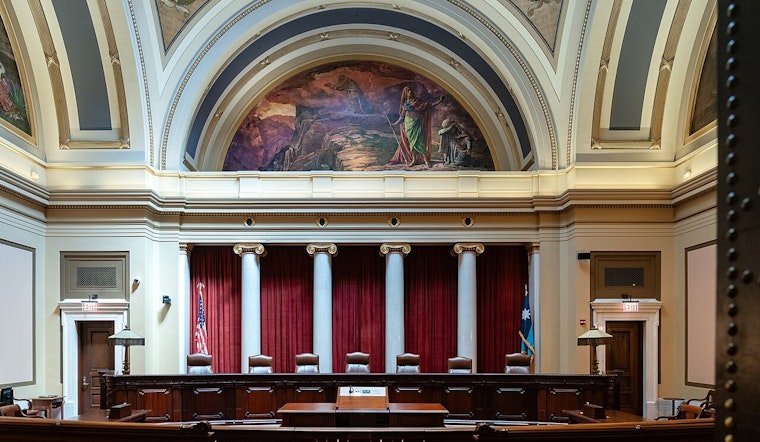
Chief Justice Natalie E. Hudson is preparing to close out a long run on Minnesota’s appellate courts, announcing Monday that she plans to retire from the state’s highest bench later this year. Hudson, elevated to chief justice in 2023, said she is grateful for the chance to lead the judicial branch as she approaches Minnesota’s mandatory retirement limit for judges. Gov. Tim Walz, who praised her as one of the state’s “giants,” will now get to fill a fresh vacancy on the seven-member Supreme Court.
Announcement and reaction
Walz publicly confirmed Hudson’s “upcoming retirement” in a Monday news release and hailed her as “one of the giants of Minnesota history,” according to the Star Tribune. His office said it will roll out more details on how a successor will be chosen in the weeks ahead.
Timing and the mandatory limit
Hudson intends to step down at the end of September, a timeline reported by KTTC, which cited her statement. Under Minnesota law, judges must retire on the last day of the month in which they turn 70, a requirement laid out in state statute; the statute defines that mandatory-retirement date.
Her career on the bench
Hudson has spent more than 20 years on Minnesota’s appellate benches. She was appointed to the Court of Appeals in 2002 and to the Supreme Court in 2015, then became chief justice in 2023, according to the Star Tribune. Before joining the judiciary, she worked in the Minnesota attorney general’s office and served as St. Paul city attorney, building a reputation rooted in appellate work long before she put on the robe.
What it means for the court
Her departure gives Walz another high-profile opening at a moment when the court’s makeup is drawing close scrutiny. The next justice will come through the governor’s established judicial-selection process, in which the Commission on Judicial Selection reviews applicants and sends finalists to the governor for a decision. The state outlines that process on its Governor's Judicial Appointments page.
Hudson's legacy
When Hudson was elevated in 2023, she became the first person of color to lead Minnesota’s Supreme Court, a milestone noted by AP News. Colleagues and legal organizations have credited her with steady leadership and efforts to broaden access to the courts, and her planned exit is likely to spark a fresh look at that record as the search for her successor moves ahead.
Next steps
Walz’s office has said it will spell out the selection timetable and next steps in the coming weeks while the commission completes its vetting. In the meantime, the Supreme Court will keep working through its docket as the transition to new leadership gets underway behind the scenes.





.jpg)