

























































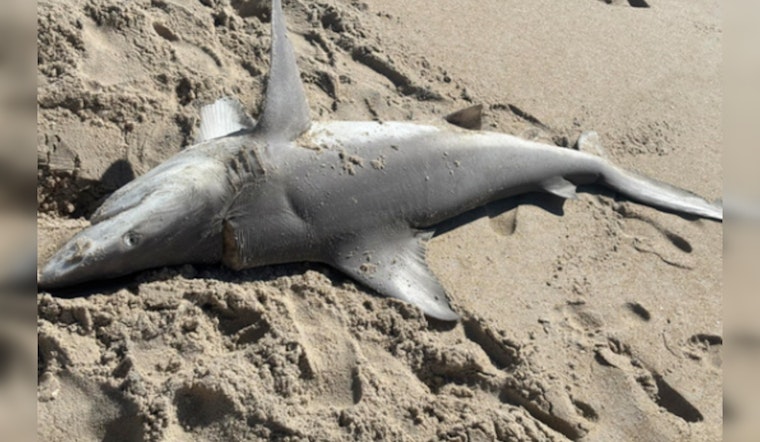
Two large sharks washing up dead on North Carolina beaches in the first week of April turned a couple of ordinary seaside strolls into something closer to a crime scene mystery. One carcass appeared on Topsail Island, the other along the Outer Banks, and both were spotted and reported by beach visitors before scientists could get to them.
According to the Charlotte Observer, the North Carolina Shark Conservancy identified the sharks as a sandbar shark and a sand tiger. Paige Finney with the conservancy told the paper that it is still unclear whether the deaths were natural or linked to human activity, and that multiple beachgoers contacted researchers about the strandings.
How Researchers Are Responding
The North Carolina Shark Conservancy operates a statewide Shark Stranding Network and asks anyone who finds a stranded shark to report it by calling (252) 216-2810 or emailing [email protected]. Volunteer teams are being organized so they can deploy quickly, collect samples and data on scene, and help determine what killed the animals, according to the North Carolina Shark Conservancy.
About the Species
Sandbar sharks typically reach about 8 feet in length, while sand tiger sharks can grow to around 12 feet. Sand tigers are often found near wrecks and live-bottom habitats and, despite their intimidating teeth, are generally docile around divers. Sandbar sharks, meanwhile, have seen their numbers fall sharply due to overfishing, although there are some signs of recovery. These details help scientists read individual strandings in a broader conservation context, according to N.C. Sea Grant’s Coastwatch, a regional marine science resource used by researchers and educators.
What Beachgoers Should Do
The conservancy cautions the public not to touch or move stranded sharks. The group notes that interacting with protected species, including dead animals, can bring legal trouble. Instead, people are urged to step back, take photos from a safe distance that include something for scale, note GPS coordinates or nearby landmarks, and then contact the Shark Stranding Hotline so trained responders can collect evidence without disturbing it, per the North Carolina Shark Conservancy.
Why Researchers Care
Each stranded shark offers a snapshot of regional shark health, migration routes and possible human impacts. Over time, those snapshots can reveal larger trends along the mid-Atlantic coast. State aquarium and conservation work focused on sand tiger recovery, including relocations and tagging projects, highlight why scientists would rather get well-documented reports than just social media photos, according to the N.C. Department of Natural and Cultural Resources aquarium program.



