

























































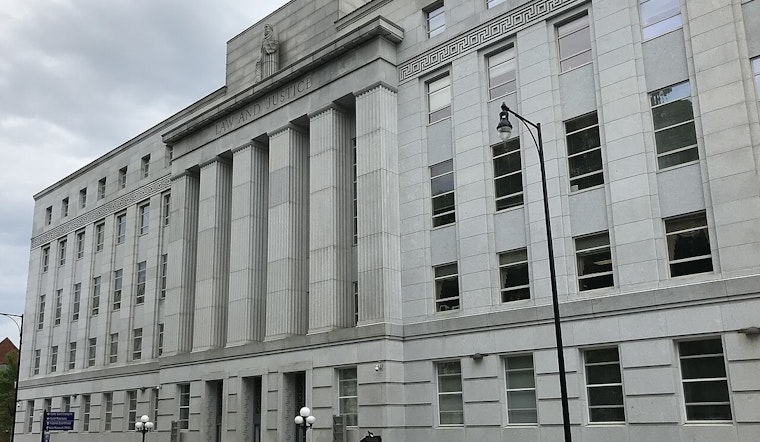
In a ruling that shook Raleigh’s education and legal circles, the North Carolina Supreme Court on Thursday filed a 244-page opinion that undercuts the long-running Leandro school-funding case. The court held that the trial court lacked jurisdiction to enter the remedial funding order, effectively wiping out a judicial path to a multi-billion-dollar plan and tossing the fight for school money squarely back to the General Assembly. Plaintiffs in the 32-year-old case had argued the state failed to provide a “sound, basic education” to students in low-wealth districts.
The opinion, filed April 2, 2026, in Hoke County Bd. of Educ. v. State and authored by Chief Justice Paul Newby, concludes the trial court exceeded its authority and that many orders entered after July 24, 2017, cannot stand. The 244-page slip opinion is available from the North Carolina Judicial Branch.
How the court reached that conclusion
The justices said the Leandro litigation morphed over the years from the original 1994 “as-applied” claims into a statewide “facial” challenge that was never properly pleaded. On that basis, they found the trial court had no subject-matter jurisdiction to issue its key remedial orders. “We conclude that the trial court lacked subject matter jurisdiction to enter its 17 April 2023 Order,” the opinion states, declaring later decisions “void ab initio.”
The court’s reasoning and holdings are mapped out in painstaking detail in the opinion, which is posted by the North Carolina Judicial Branch.
Reaction and consequences
Advocates for students in high-poverty districts described the ruling as a gut punch. “The State of North Carolina has failed to provide students with the education they are owed under our constitution,” Every Child NC said, according to Spectrum News.
Republican legislative leaders, by contrast, cast the decision as a win for the legislature’s control over the purse strings. Demi Dowdy, a spokeswoman for House Speaker Destin Hall, told Spectrum News that “House Republicans remain committed to investing in public education” and pointed to a budget proposal that would raise starting teacher pay to $50,000 and provide 8.7% average raises.
Why Leandro has loomed for decades
The dispute traces back to 1994, when families and five low-wealth districts sued, arguing that North Carolina’s school system denied their students the constitutionally guaranteed opportunity for a sound basic education. Reporting from WUNC follows the long arc of the case, including key 1997 and 2004 rulings that shaped what later became the remedial plan at the center of this week’s decision.
What comes next
Practically speaking, the ruling strips the trial court of its most direct tool for ordering money transfers and reinforces that the General Assembly controls appropriations. That means the remedy now lives in the political arena, not the courtroom, unless plaintiffs decide to file a new, properly pleaded challenge.
Parties had estimated about $677.8 million remained to cover years two and three of the remedial plan that had been crafted in response to earlier Leandro rulings. Reporting from WRAL lays out how that plan was built and how the funding numbers were calculated.
Legal implications
The opinion treats subject-matter jurisdiction as a hard limit. When a court does not have it, its orders may be void and unenforceable. That legal stance means any future push to secure funding for Leandro-style remedies will almost certainly have to run through the General Assembly unless a fresh lawsuit reframes the challenge and survives the jurisdictional hurdles the Supreme Court underscored here.





