

























































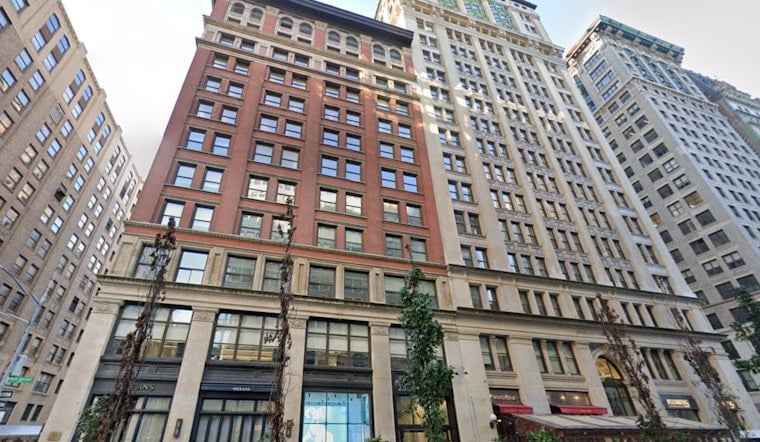
The long-troubled office campus at 225–233 Park Avenue South, once a go-to tech magnet near Union Square, is being lined up for a serious reset. Ownership has begun the process of physically splitting the connected buildings so that one can be marketed for residential conversion. After years of big-name tenants walking away and values sliding, vast stretches of the complex now sit idle. If a deal pencils out, the property could swap out its bygone open-plan offices for badly needed apartments in a part of Manhattan where housing demand is still strong.
Owner moves to separate the conjoined campus
According to Crain's New York, the owner is actively working to separate the two formerly conjoined buildings at 225 and 233 Park Avenue South so that one of them can be positioned for a residential conversion. Crain's reports that the tower is now “nearly vacant” and that untangling the legal and physical connections between the structures is expected to make it easier to reconfigure office floors into housing. The shift is being cast as a clear move away from traditional office use after a prolonged struggle with vacancy.
From tech headquarters to vacancy
The campus once boasted a buzzy roster of tenants, including Facebook/Meta and BuzzFeed, but the tech exodus has been steady. Bisnow reported in April 2024 that Meta agreed to pay roughly $33 million to terminate its lease, and that the loan backing the property was transferred to a special servicer amid concerns about a potential default. Bloomberg previously detailed Meta’s 2022 decision to exit the Park Avenue South space, a move that blew a sizable hole in the building’s tenant roster.
Who’s left and who’s invested
The complex is not completely hollowed out. Workplace software firm monday.com expanded at 225 Park Avenue South in December 2025, taking about 138,611 square feet, according to Commercial Observer. The same outlet reported that Orda Management explored a recapitalization in 2025 that would bring in new equity partners, a step that could determine whether the site is pushed harder for new office leasing or steered toward a full or partial residential conversion. Those moves suggest the owners are keeping their options open while Manhattan’s office market continues to reset.
Legal and financial hurdles
Turning aging office floors into apartments is not just a matter of knocking down walls, it is a financing and regulatory puzzle. Bisnow notes that the property was refinanced in 2017 into a structure that includes a $235 million CMBS loan and a roughly $195 million mezzanine piece, with the CMBS portion maturing in 2027. That debt stack, combined with the loan’s transfer to special servicing, makes any quick shift to residential use more complicated. Lenders, would-be equity partners and city agencies all need to align before a conversion plan can realistically move ahead.
How conversions happen in New York
New York City has expanded rules and incentives to make office-to-residential conversions more workable, but the projects are still expensive and technically demanding. The New York City Comptroller’s office has found that while hundreds of conversions have been completed or permitted, the largest ones are clustered mostly in lower Manhattan and typically require heavy upgrades to plumbing, fire and life-safety systems, and shared spaces. Tax breaks and zoning changes tied to the city’s pro-housing agenda can help make the numbers work, yet developers still need substantial capital to shoulder those construction and redesign costs, according to the NYC Comptroller.
What to watch next
Observers will be watching for fresh Department of Buildings filings, marketing materials that pitch the property as stacked residential floors rather than office space, and any formal proposals from the equity groups said to be circling the asset. Representatives for the owner have historically been hard to reach, Commercial Observer reported, so the first concrete signs of a conversion could surface in loan documents or DOB permits rather than splashy press releases. For neighbors and rental-market watchers, the looming question is whether the economics finally add up to turn those mostly empty office floors into actual homes.





