

























































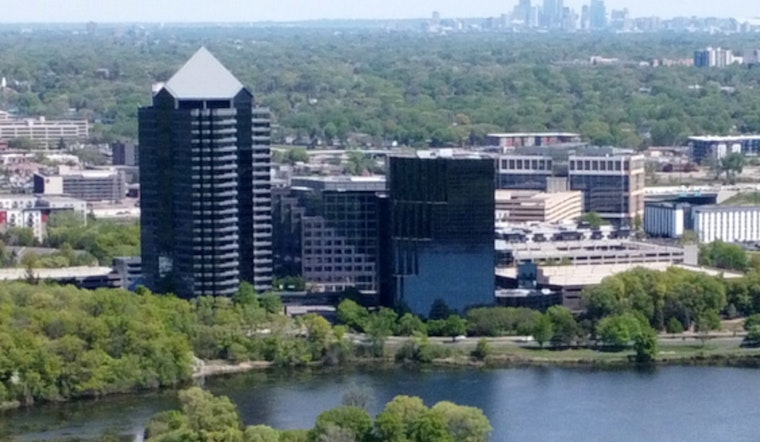
Another shoe has dropped at Bloomington’s Normandale Lake Office Park, where a lender is moving to foreclose on yet another tower and is seeking roughly $31.1 million from a building owned by an entity tied to New York-based Opal Holdings. It is the latest in a string of lawsuits and receiverships dogging the five-tower campus since it changed hands in 2022. Once one of the suburbs’ marquee office addresses, the complex has seen multiple lenders push individual towers toward distress sales and sheriff ’s-sale notices.
According to reporting by the Minneapolis/St. Paul Business Journal, the new complaint asks a court to foreclose on the building and appoint a receiver to collect rents and run the property while the case plays out. The Business Journal’s coverage lists about $31.1 million in claimed debt, taxes, and fees tied to the mortgage and related obligations.
The Star Tribune has tracked several similar actions at Normandale, detailing how lenders have gone after multiple towers and, in some instances, sought multimillion-dollar judgments after alleging missed payments and unpaid taxes. That coverage also notes that New York investors paid about $366 million for the entire five-building campus in 2022.
The park’s leasing materials at Normandale Lake Office Park put the campus at roughly 1.7 million square feet of Class A office space, in a suburban market that has clearly cooled. One tower at the complex sold at a distress price last year for about $4 million, according to Axios, a figure that coverage says reflects steep value declines across the property.
Reporting by The Real Deal and other outlets has highlighted an ownership and financing structure at Normandale that splits ownership of the land and the buildings and layers in ground leases, a setup that lenders say has made foreclosure and resale far more complicated. That playbook has pushed some lenders to pursue receivership, sheriff’s sales, and, in certain cases, court actions aimed at enforcing personal guarantees.
Legal Process And What Comes Next
In cases like this, lenders typically ask judges to appoint a receiver, seek immediate control of the property, and, if they win, move toward sheriff’s sales to liquidate leasehold or title interests. Public notices tied to recent Normandale litigation show judges entering multimillion-dollar judgments and setting sheriff’s sale dates. One such notice cited a judgment of roughly $36.1 million and a February 2026 sheriff’s sale tied to another tower at the campus, according to Finance & Commerce.
What happens next at this tower will hinge on court timetables, whether a receiver is installed, and whether bidders emerge at auction or the lender and owner negotiate a workout. Under Minnesota law, owners can sometimes redeem properties within set windows after a sheriff’s sale, and lenders have to weigh that redemption timeline against the ongoing costs of carrying a distressed asset.
For the city of Bloomington and Hennepin County, additional foreclosure drama at Normandale could pressure property tax collections and rattle the web of local vendors and tenants connected to the campus. The Star Tribune has pointed to elevated office vacancies along the I-494 corridor, a backdrop that has already cut asset values and sharpened lenders’ focus on how much they can realistically recover.



