

























































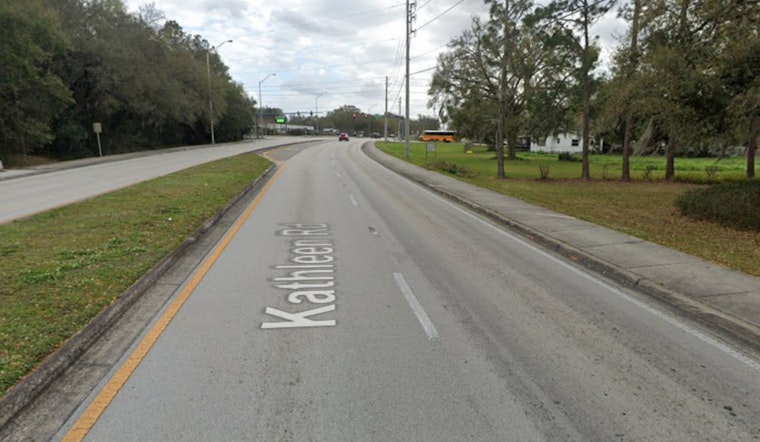
A roughly 1.5-mile run of Kathleen Road in north Lakeland has earned an unwelcome title: Polk County’s most crash-prone county-owned roadway. Planners counted 366 collisions between 2020 and 2025 on that short stretch, including three deadly crashes. Heavy traffic, speeding and awkward roadway geometry, along with places where the road tightens from four lanes to two, have turned the corridor into a daily pressure cooker for drivers.
Residents and members of the Polk Transportation Planning Organization say they are not surprised and have watched close calls flip into tragedy in a matter of seconds. As reported by Tampa Bay 28, neighbor Sheila Watkins has seen multiple crashes near shopping areas and at spots where lanes shift, while Polk TPO Executive Director Ryan Kordek noted that bicycle and pedestrian injuries along the corridor have sometimes been severe.
What the planning data shows
The Polk Transportation Planning Organization’s Vision Zero analysis tags CR 35A (Kathleen Road) as one of the county’s highest-injury corridors, with repeated crashes clustering at intersections and lane transition zones. That assessment, which guides how the TPO ranks safety projects, points to a pattern of rear-end crashes and collisions that are more frequent and often worse after dark. Planners say that mix suggests both design issues and lighting gaps that leave drivers, walkers and cyclists more exposed than they should be.
As outlined by the Polk Transportation Planning Organization, the Vision Zero framework leans heavily on engineering fixes that make roads more forgiving when people inevitably make mistakes, rather than assuming perfect behavior behind the wheel every time.
Officials' proposed fixes and funding
Local officials say an influx of federal funding will let the TPO dig deeper into Kathleen Road’s problems and spell out concrete countermeasures, such as stronger lighting, upgraded crosswalks and carefully targeted lane changes. In coverage by Tampa Bay 28, Kordek described the corridor as having “a number of rear-end crashes” and noted that many of the wrecks hit at night in low-light conditions.
Separate from the safety study, a recent federal appropriations item set aside $3 million for design and permitting tied to a longer Kathleen Road extension project, according to Bay News 9. Local officials say that pot of money will support planning for both safety and capacity upgrades along the broader corridor.
What residents and drivers can expect next
Until the orange cones and work crews show up, planners and law enforcement say driver behavior is still the front line. Slowing down, leaving more room and watching closely for people on foot or on bikes can lower the odds of yet another crash on a road already known for them.
The Polk TPO’s Vision Zero study highlights roadway design and lighting as key tools to rein in speeding and reduce nighttime risk, and officials say the new round of analysis will try to balance quick, low-cost fixes with larger, long-range projects. Neighbors, for their part, say they plan to keep an eye on whether the eventual solutions feel big enough for a corridor with this kind of crash record.
In the coming months, Polk TPO board meetings and local government sessions are expected to turn the study’s findings into specific projects, budgets and timelines. Planners say that with federal dollars in hand, Vision Zero guidance on the books and steady community feedback, they finally have a clearer path to making Kathleen Road safer for the thousands of people who travel it every day.



