

























































Early Sunday, a burst of seismic activity rippled through the Pacific Ocean about 240 miles west of Westport, Washington, shaking awake instruments along the coast and giving residents a subtle reminder of the restless geology offshore.
Over just a few hours, roughly 18 small earthquakes popped off in a tight cluster, according to The Seattle Times. The largest came in at magnitude 4.2, with several others near magnitude 4.1. The shaking was mostly something only the seismometers noticed, and there were no immediate reports of damage or injuries.
Where The Quakes Hit
The U.S. Geological Survey placed the magnitude 4.2 epicenter near 46.733°N, 129.200°W, at a depth of about 10 kilometers. Several smaller quakes registered nearby, forming a compact swarm.
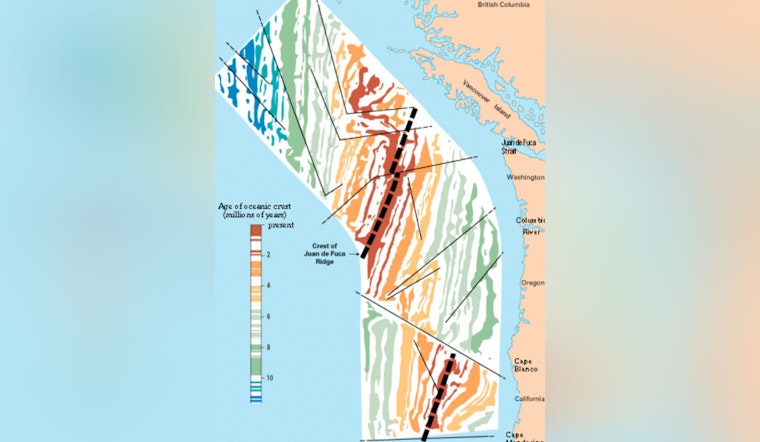
The Pacific Northwest Seismic Network live map shows the activity lining up along the Juan de Fuca Ridge rather than on the Cascadia subduction zone. That ridge setting helps explain why the magnitudes stayed modest and why this was more of a scientific curiosity than a coastal emergency.
No Tsunami Threat, Officials Say
Local seismologists told The Seattle Times that the shallow, ridge-related style of faulting means “these types of earthquakes do not create a tsunami hazard.” West Coast tsunami centers did not issue alerts, and state emergency officials saw no need for coastal evacuations.
Why It Happened
Scientists say the swarm fits right in with normal behavior along the Juan de Fuca spreading system, where tectonic plates pull apart and new ocean crust is born. That process regularly produces shallow, low-magnitude earthquakes.
It is a very different setup from the locked Cascadia megathrust closer to shore, which is associated with the rare but massive, tsunami-generating earthquakes that dominate disaster planning in the region.
What To Watch Next
Swarm sequences like this usually fade over hours or days. A few smaller aftershocks are possible, and seismologists will keep an eye on the area, but the pattern so far matches routine ridge activity.
For real-time locations and magnitudes, the U.S. Geological Survey event page and regional seismic monitoring sites remain the go-to places for updates.




