

























































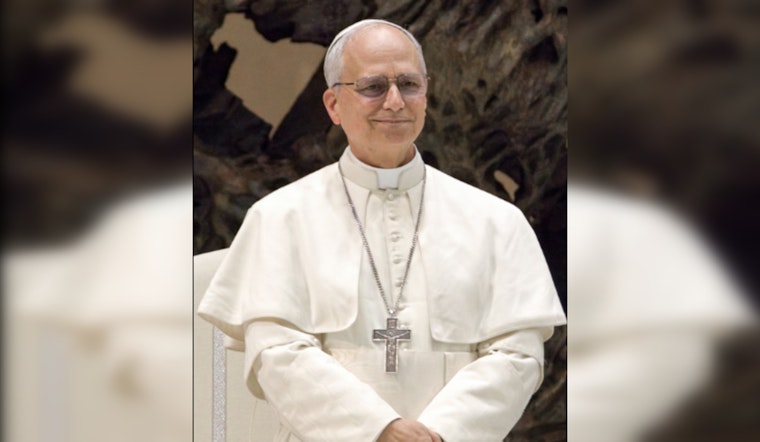
A source close to Pope Leo XIV told NBC Chicago that a closed-door January meeting between Pentagon officials and Cardinal Christophe Pierre was “most unpleasant and confrontational,” turning what had been a quiet diplomatic encounter into a public strain on U.S.-Vatican relations. The account surfaced as the pope has been making increasingly public appeals for peace in the Iran war and it has prompted quick denials from U.S. defense officials.
The account was first detailed by The Free Press, which reported that Under Secretary of Defense for Policy Elbridge Colby summoned Cardinal Pierre and, according to officials briefed on the meeting, told him that “America has the military power to do whatever it wants, and that the Church had better take its side.” Christopher Hale’s newsletter Letters from Leo said it independently confirmed the Free Press account and reported that some Vatican officials were alarmed enough to shelve plans for a papal visit to the United States.
Pentagon pushback
The Pentagon pushed back, calling The Free Press’s characterization “highly exaggerated and distorted” and insisting the meeting was “a respectful and reasonable discussion.” Officials also pointed to Under Secretary Colby’s public statement that he “had a substantive, respectful, and professional meeting” with Cardinal Pierre on Jan. 22, 2026. As reported by NBC Chicago, defense officials emphasized that they want dialogue with the Holy See to continue, even amid the noise.
Vatican reaction and denials
On the Vatican side, Ambassador Brian Burch wrote on social media that Cardinal Pierre “confirmed that recent media characterizations of his meeting with Undersecretary Colby are ‘fabrications’ that were ‘just invented.’” As noted by NBC Chicago, Burch described the session itself as “frank and cordial,” a far cry from the “most unpleasant” label circulating elsewhere.
At the same time, the Vatican released a message from Pope Leo XIV to residents of Debel, Lebanon after a Vatican-led convoy carrying more than 40 tons of Easter aid was blocked from reaching the town for what Lebanon’s Maronite Church described as security reasons. The canceled delivery was reported by the AP, adding another tension point to an already fraught regional situation.
Pope's speech and regional fallout
Pope Leo XIV, the first pope born in the United States and a native of Chicago, has recently taken a sharper public line on the Iran war. He has rebuked President Trump’s warnings to Iran, calling the president’s threat to “destroy Iranian civilization” “truly unacceptable” and stressing that attacks on civilian infrastructure violate international law. Those comments, combined with the blocked aid delivery, have fueled international concern as diplomats try to hold together a fragile ceasefire in the region.
According to the AP, the pope has urged people of good will everywhere to press their leaders for peace, effectively inviting ordinary Catholics and non-Catholics alike into the diplomatic fray.
What to watch
The big unanswered question is whether this “most unpleasant” meeting turns into a lasting diplomatic rift or just a bad day at the office. Officials who spoke to The Free Press said the Vatican shelved plans for a U.S. visit by the pope in the wake of the episode. Vice President JD Vance, for his part, has said he would “look into” the reports, a response noted by Newsweek.
Observers will be watching for any formal statements from the Pentagon or the Holy See that go beyond carefully worded denials, and to see whether congressional leaders decide to press for more detailed answers. For now, both sides insist they value dialogue, even as their stories about what happened behind those closed Pentagon doors clearly diverge. Washington and Rome look prepared for more difficult conversations ahead.





.png)