

























































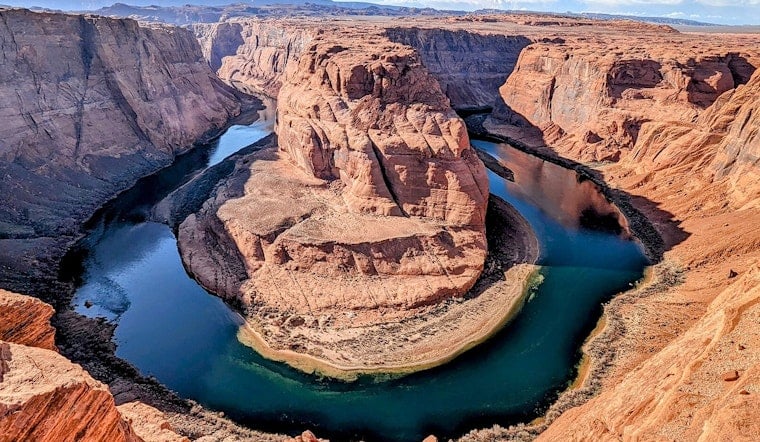
A new interdisciplinary study is throwing some cold water on the Southwest’s conservation victory lap. Cities that rely on the Colorado River, including Phoenix, Las Vegas and Denver, have already squeezed major savings out of household and landscape use, yet the research finds that shrinking river flows under climate change could still leave them short. Even under realistic warming scenarios, the study shows that steep cuts in demand can be outpaced by falling supplies, which is why local utilities and elected officials are now eyeing costly, slow-to-build projects such as desalination plants, advanced water reuse and shifts in agricultural allocations. Conservation, the authors warn, is buying time, not permanence.
Las Vegas and Phoenix, in particular, tell two versions of the same high-wire act. Since 2002, Las Vegas has slashed per-capita water use by nearly 60%, while Phoenix has trimmed overall municipal consumption by roughly 20% over the last two decades, even as both metros kept booming. The paper credits turf removal, tiered pricing and indoor water recycling for much of that progress. As Westword notes, those tools buy breathing room but may not be enough to head off serious future shortages.
Study: Conservation Helps But May Not Keep Up With Warming
The research team combined household surveys with hydrologic and reservoir modeling to see how far demand-side measures can really go. They found that conservation improves reliability under milder warming scenarios but can be overwhelmed when river flows drop sharply. In several modeled futures, even demand reductions in the range of 20% to 25% failed to prevent severe shortages. Under a moderately high emissions pathway, Phoenix’s available surface water supplies could fall below their historical average by 2060. According to Penn State, the study appears in the journal Water Resources Research.
The Colorado River Is The Basin’s Lifeline
The Colorado River system is doing a lot of heavy lifting. It supplies water to nearly 40 million people and irrigates roughly 5.5 million acres of farmland, so even modest long-term declines in flow translate into big shortages across multiple states and sectors. Levels in the system’s key reservoirs, Lake Powell and Lake Mead, have hovered well below historical norms for years, and federal 24-Month Studies along with operational forecasts show that usable storage remains thin. That basin-wide backdrop helps explain why demand cuts alone may not be enough, according to the USGS and the Bureau of Reclamation.
What Cities Are Doing Now
City water departments have not exactly been sitting on their hands. Las Vegas recycles much of its indoor wastewater, enforces strict outdoor watering rules and pays residents to rip out grass. Phoenix has expanded turf-removal incentives, invested in leak detection and rolled out smart-meter programs. The result has been large per-person declines in municipal water use. Still, managers and researchers consistently describe these steps as one layer in a broader strategy, not a silver bullet for the entire basin. Reporting from the Smithsonian and Arizona PBS lays out how these programs function and where the gaps remain.
Supply Options Are Costly And Slow
Once the easy conservation wins are gone, cities typically turn to supply projects that demand deep pockets and long timelines. One oft-cited example is San Diego’s Claude “Bud” Lewis Carlsbad desalination plant, which cost roughly $1 billion for the facility, a dedicated pipeline and system upgrades, highlighting the price tag for a single major new source. The paper’s authors and local water managers say that investments in reuse, desalination and basin-wide tradeoffs will likely be needed under many plausible futures, and the San Diego County Water Authority provides detailed background on the Carlsbad project. As outlined by SDCWA, projects like these carry steep costs and long lead times.
What Policymakers Face Next
Policymakers now have to match local conservation with basin-scale deals that decide who gets what when the river runs low. State and federal operating rules govern how scarce water is shared, which means federal post-2026 planning, monthly Reclamation forecasts and ongoing negotiations are already shaping winners, losers and everyone in between. As ASU News and federal post-2026 scoping materials report, the coming months are critical in determining whether continued conservation will be enough or whether the region will have to speed up expensive supply projects and reallocate existing uses. Planning documents from the Bureau of Reclamation underscore how urgent those choices have become.
For residents, the message is familiar but more pressing: keep cutting back where you can, support durable investments in reuse and resilience, and be prepared for tough basin-level tradeoffs as officials juggle affordability, equity and reliability. Conservation is still essential, but the study makes clear it is just one piece of a larger, more expensive strategy the West will need if Colorado River flows keep trending downward.



