

























































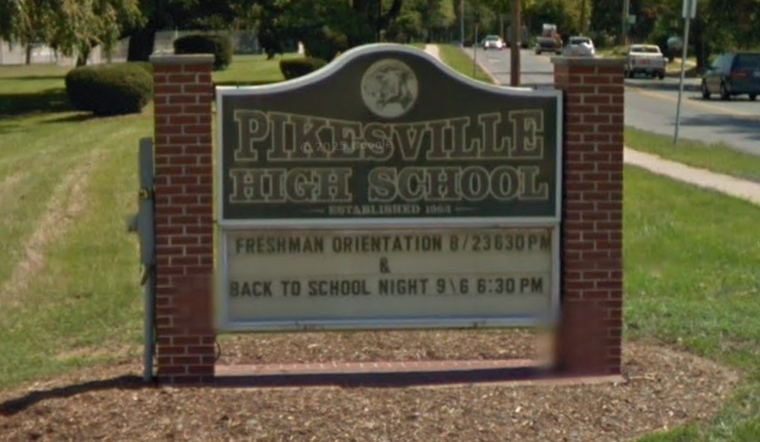
After an ugly deepfake scandal at Pikesville High School put a principal in the crosshairs, Maryland lawmakers have moved to crack down on people who weaponize artificial intelligence. This month, they passed a bill that specifically folds deepfakes into the state’s identity fraud law, aiming squarely at AI‑generated impersonations that cause real‑world damage. The measure, pushed through in the wake of the 2024 Pikesville incident, now heads to Gov. Wes Moore’s desk with new criminal penalties and a private right of action for victims.
The new statute, filed as SB0008/HB0184, creates an official definition of a “deepfake representation” and makes it a crime to use artificial intelligence or synthetic media to impersonate or falsely portray someone “with the intent to defraud, mislead, or cause harm,” according to the Maryland General Assembly. Penalties scale with the damage. Fraud schemes tied to losses in the six‑figure range can bring prison terms of up to 20 years, while a single‑victim impersonation case can carry up to five years behind bars, according to the text of the bill.
The Pikesville saga is what pushed lawmakers off the sidelines. Prosecutors say a former athletic director at Pikesville High used AI tools to create a racist, antisemitic audio recording that sounded like then‑principal Eric Eiswert. He later entered an Alford plea and received a four‑month county sentence while facing separate federal charges, according to AP News. Local coverage and court filings linked the episode to a broader pattern of AI misuse that lawmakers said existing identity‑fraud laws did not cleanly cover, as detailed by The Baltimore Banner.
What the law does
Under the bill, “personal identifying information” is updated to explicitly include biometric markers such as fingerprints, voice prints, and retina or iris images. AI‑generated audio or video that is effectively “indistinguishable” from a real person can be treated as evidence of identity fraud, according to the Maryland General Assembly. The statute also gives victims a private civil cause of action so they can go to court themselves to seek injunctions that stop the spread of synthetic content and to recover restitution. On the enforcement side, it authorizes state police to investigate AI‑assisted identity‑fraud cases that cross county lines.
Why lawmakers pushed this now
Lawmakers and prosecutors argued that the timing was not optional. AI‑aided scams and hoaxes have been ramping up, and officials say they wanted the law to acknowledge that reality. The FBI’s 2025 Internet Crime Report logged 22,364 complaints that referenced artificial intelligence, with adjusted losses approaching $893 million. The National Conference of State Legislatures reports that states rolled out a wave of AI‑related proposals last year as legislatures tried to keep pace with the technology, according to its data.
Local reaction and next steps
Sen. Katie Fry Hester, the bill’s sponsor, framed the message in blunt terms: “If you use AI to deceive, defraud or harm someone, Maryland law is going to hold you responsible,” she told The Baltimore Banner. Billy Burke, who represented Eiswert after the Pikesville episode, called the legislation “a great first step,” and prosecutors who worked the case urged lawmakers to close the legal gap that the incident exposed. Hester has said she is optimistic that Gov. Wes Moore will sign the measure. If he does, the law is scheduled to take effect on October 1under the state’s legislative calendar.
Legal implications
If the governor signs off, prosecutors will gain a clearer path to charge identity fraud in cases where AI is used to impersonate someone, and victims will have more direct civil tools to try to shut down and unwind the spread of deepfaked material, including injunctions and restitution. Defense attorneys are likely to challenge how courts apply the statute’s intent to cause harm requirement, especially where it brushes up against First Amendment arguments. Supporters of the bill say that the intent standard is there precisely to keep the law from sweeping up protected speech while still giving Maryland a way to respond when AI fakery is used as a weapon.





