

























































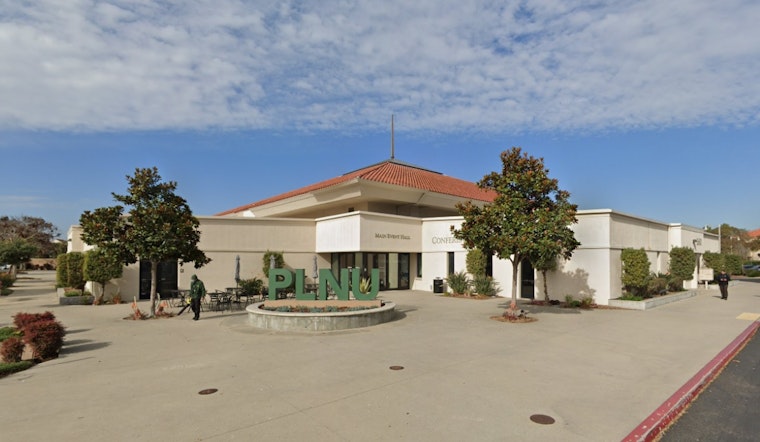
More than 250 residents jammed into the Liberty Station Conference Center on Wednesday night as six of the seven candidates for San Diego's open District 2 City Council seat traded shots over Midway Rising, the mayor's budget and who should ultimately control Liberty Station. On stage were Richard Bailey, Josh Coyne, Nicole Crosby, Mandy Havlik, Jacob Mitchell and Paul Suppa. With incumbent Jen Campbell term-limited, the race has turned into a proxy fight over big development, neighborhood preservation and how City Hall spends its money.
The League of Women Voters and the Point Loma Association co-hosted the forum as part of a slate of pre-primary events aimed at giving voters a clear side-by-side comparison. The League of Women Voters San Diego lists the forum on its calendar and describes its nonpartisan, timed-question format.
Liberty Station ownership and the Seligman claim
Who controls Liberty Station, the retail and arts hub on the Point Loma waterfront, quickly became one of the liveliest flashpoints of the night. Most candidates argued the city should work to keep the complex in public hands, and several sharply criticized the Seligman Group, the largest leaseholder, which they said has pressed the city in ways that could ultimately force a sale, according to reporting from Times of San Diego.
The Seligman Group property portfolio lists Liberty Station among its holdings, a detail that has only intensified local anxiety over whether a coveted waterfront asset might slip out of long-term public control.
Midway Rising remains a test case
Midway Rising, the multibillion-dollar plan to replace the aging arena with thousands of homes, new parks and a modern entertainment venue, dominated much of the discussion. The project has been slowed by legal challenges and state court rulings that restored a 30-foot height cap, yet developers and city officials are still negotiating how to move it forward, as outlined by KPBS.
City documents show the council meeting in closed session to discuss potential long-term ground leases with Midway Rising, LLC for property along Sports Arena Boulevard, signaling that the proposal remains very much alive at City Hall. That confidential negotiation is listed on a recent City Council closed-session agenda.
Budget tensions: arts, police and middle management
The mayor's proposed budget sparked a separate round of sparring over what to protect and what to cut. Several candidates warned against deep reductions to arts and culture programs, while others called for trimming city bureaucracy instead. Candidates, including Mitchell, Crosby, Havlik, and Suppa, said they opposed proposed cuts to arts funding, while Havlik and Bailey urged slimming middle management, and some contenders floated one-time grants for projects such as the Ocean Beach pier, according to the Times of San Diego.
The divide over policing policy also surfaced. A majority of the panel said they would not support cooperation with federal immigration enforcement, while Bailey emphasized working with federal officials on violent crime. The contrast gave voters a clearer sense of how the next councilmember might approach law enforcement from the dais.
Legal implications
Both the Liberty Station fight and Midway Rising come with significant legal baggage. Midway Rising has already been reshaped by CEQA lawsuits and state court rulings, and any sale or transfer of Liberty Station land could invite more litigation. Observers note that lawsuits and behind-the-scenes administrative negotiations are likely to shape the fate of these projects at least as much as public votes, a dynamic detailed in recent reporting on how San Diego fights the 30-foot lid.
What comes next is already on the calendar: the June 2 municipal primary will narrow the crowded District 2 field. The City of San Diego election information page confirms the June 2 primary date, and a series of spring hearings and council votes will determine whether Midway Rising advances and whether any significant change at Liberty Station actually moves forward.





