

























































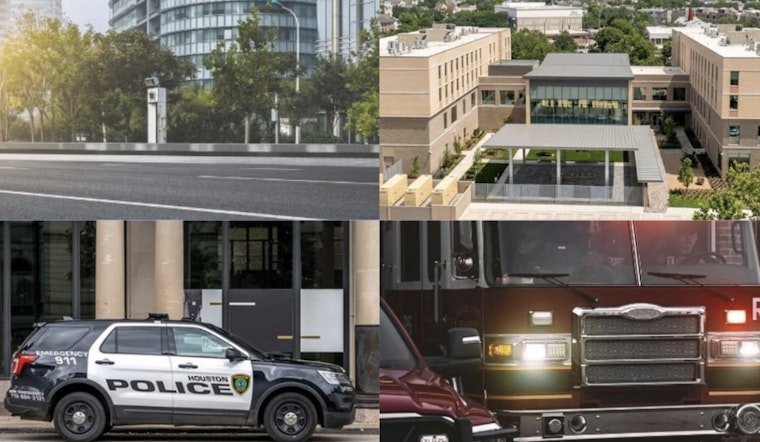
Houston City Council just signed off on a big-ticket set of projects that aim to smooth out streets and beef up public safety around town, approving money for repaving, a new public-safety hub, support for youth experiencing homelessness, and the early design work for a new fire station in southeast Houston.
The package includes roughly $48.8 million for asphalt improvements that city officials say will cover an estimated 1,000 miles of lanes, $2 million for a northwest public-safety complex, $545,534 for youth homelessness services, and $1.35 million to design a new fire station in southeast Houston.
The rollout was summarized by the Houston Mayor's Office on X in a short "City Council recap," which framed the votes as investments in "safer streets & stronger communities." Council members adopted the appropriations after Wednesday's regular meeting, clearing the way for design contracts and service agreements to start moving.
Yesterday’s City Council recap: $48.8M for asphalt improvements (1,000 miles of lanes), $545K to support youth homelessness services, $2M for a new NW public safety complex, and $1.35M to design a new SE Houston fire station. Investing in safer streets & stronger communities. https://t.co/CXPfoiq8AE
— Houston Mayor's Office (@HoustonMayor) April 2, 2026
Citywide paving push
The $48.8 million street-resurfacing pot is only one slice of a much larger pavement program. The city's adopted Capital Improvement Plan shows a Citywide Street & Traffic Rehabilitation program that budgets roughly $94.7 million a year for street repairs and overlays. As outlined in the City of Houston Capital Improvement Plan, that line item covers dozens of neighborhood paving and drainage projects scheduled over several years.
Using the Mayor's Office figures, $48.8 million spread across 1,000 lane-miles comes out to about $48,800 per lane-mile. That level of spending generally pays for targeted overlays and patches rather than full rebuilds, so residents can expect crews to zero in on the roughest corridors first instead of wholesale reconstruction of every shabby street in sight.
Westview and Gessner targeted as public-safety hub
Council also set aside $2 million for a northwest public-safety complex planned for the long-troubled Park on Westview Apartments site at Westview and Gessner. A District A annual report and reporting from the Houston Chronicle show the property was acquired by a TIRZ and is slated for demolition, flood detention work, and construction of a combined police-and-fire campus to replace aging facilities nearby.
For neighbors who have watched the Park on Westview complex cycle through repeated trouble, the plan essentially trades a chronic problem property for a public-safety anchor, with flood-control work built into the deal.
Design cash lines up with fire station playbook
The $1.35 million for a southeast Houston fire station is an early design step that tracks with how the city usually handles fire facilities in its capital plan. The adopted Fire Protection Facilities plan spreads planning, land acquisition, and design across multiple fiscal years before any shovels hit the ground.
That plan lays out multi-bay replacement projects, including station replacements that come with design budgets in the roughly $1.5 million range, which suggests this council vote is the front end of a larger, multi-year build rather than a one-off. See the Fire CIP for the line-item detail.
Small pot for youth homelessness services
The council carved out $545,534 for emergency shelter, case management, and supportive services for young adults experiencing homelessness. That funding fits into broader city work on youth homelessness, including strategies and federal partnerships described in Houston's 2024 Annual Action Plan, which aim to pair short-term shelter options with longer-term housing and case management systems.
In practice, that means the new money is meant to complement, not replace, existing programs, adding capacity to a part of the system that often sees demand outstrip available beds and services.
What residents should expect next
City departments will now move the appropriations into design contracts and service agreements, with street crews and outside contractors working from pavement-prioritization lists already in the pipeline. Residents can expect phased construction, intermittent lane closures, and the familiar sight of fresh asphalt as overlays and related drainage work roll out.
At the Westview site, the sequence runs from demolition to flood detention work and then into planning and design for the public-safety complex, so the visible changes may come in stages rather than overnight. For the official recap, the Houston Mayor's Office post on X and the city's Capital Improvement Plan pages list the votes and project details in full.




