

























































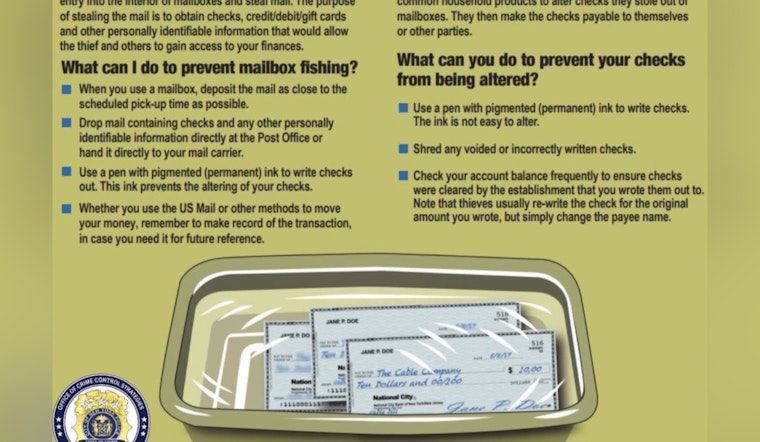
Queens cops say thieves have been angling for your outgoing bills. On Saturday the 102nd Precinct warned that "mailbox fishing" and "check washing" schemes are on the rise, with thieves targeting curbside USPS boxes for outgoing checks and documents. The precinct is pushing back with simple precautions, like handing payments to a postal clerk, using permanent pigmented ink, and shredding voided checks to blunt the scam's most common tricks.
Precinct advice and what to watch for
In a post on X, Captain Pratima B. Maldonado, the precinct's commanding officer, said thieves are targeting mailboxes to steal checks, credit and debit cards, and other personally identifiable information, and urged neighbors to take practical steps to protect themselves, per the NYPD 102nd Precinct post. The post lists recommended measures including depositing mail as close to the scheduled pickup as possible, dropping check-containing envelopes at a post office or directly to a mail carrier, using pigmented permanent ink for checks, shredding voided checks, and keeping records of transactions.
How the scams work
According to the NYPD Crime Prevention Division, mailbox fishing typically involves lowering a sticky line or makeshift hook into blue USPS collection boxes to pull out envelopes. Check washing uses common solvents to remove the payee and amount fields so thieves can rewrite checks to themselves. The division warns that a low-tech toolbox, using everything from glue traps to illicitly obtained postal keys, can be used to steal checks in bulk.
Why officials are alarmed
Federal authorities say these schemes have fed organized operations that steal checks from mailboxes, wash or digitally alter them, then move the proceeds into third‑party accounts. An indictment in the Southern District of New York described defendants who allegedly obtained postal keys and posted millions of dollars' worth of stolen checks for sale, according to the U.S. Department of Justice. Financial regulators have also issued nationwide alerts about a spike in mail-theft related check fraud, and a recent alert from FinCEN highlights the organized nature and scale of some of the cases.
How to protect your payments
Local and federal agencies offer a short checklist: go inside the Post Office to drop checks when possible, deposit outgoing mail before the last pickup, hand payments directly to your carrier, use pigment-based permanent pens and fill in every line on a check, and shred any incorrect or voided checks. These steps are recommended by the New York Department of State, which also points to signing up for USPS Informed Delivery as another layer of protection.
If your mail or a check is stolen
If you suspect mail theft, contact your bank right away and file a police report so investigators can document what happened. You should also report the theft to the Postal Inspection Service at uspis.gov/report or 1‑877‑876‑2455, and consider filing a complaint with the FBI's Internet Crime Complaint Center, according to the FBI.
Local context
The 102nd Precinct's advisory follows similar warnings from other city precincts and local outlets that have been tracking mailbox-fishing incidents across the boroughs. Brooklyn Mailbox Bandits summarized several recent precinct posts and the broader push toward electronic payments as a safer alternative.
For Queens neighbors who still use paper checks, the message from police is plain: shorten the time your payment spends in a blue box and make it harder to alter if it is stolen. The 102nd Precinct's advisory and federal guidance together offer a straightforward checklist for cutting your risk.





