

























































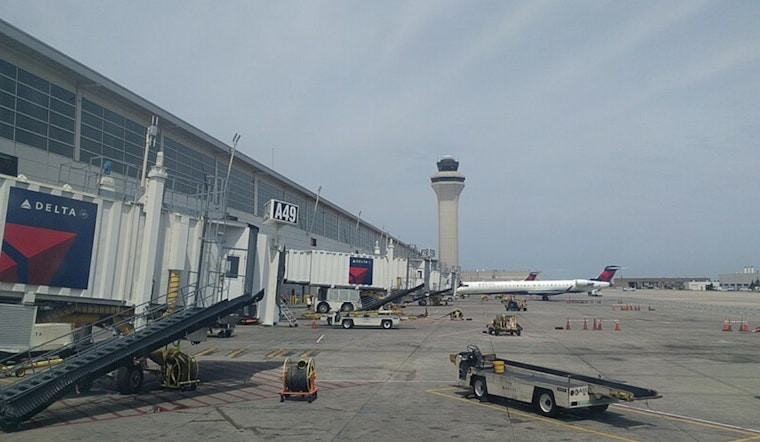
AI-driven autonomous wheelchairs are now cruising through the Warren Cleage Evans Terminal at Detroit Metropolitan Wayne County Airport, giving travelers a new hands-free way to get to gates, restrooms and concessions. The pilot program, a partnership between the Wayne County Airport Authority and Unifi, follows a year-long test run at the airport’s larger McNamara Terminal. Airport staff say the familiar, staff-assisted wheelchair service is not going anywhere and will remain available for travelers who prefer or need more direct help.
Blueberry-powered vehicles navigate the terminal
The vehicles at Evans are described as personal mobility devices built on Blueberry Technology’s platform, which uses artificial intelligence and preloaded virtual maps to chart safe paths through the terminal. The system includes obstacle detection, geo-fencing, indoor speed limits, manual override and emergency-stop controls, and is aimed at travelers who can transfer on their own but may find long terminal walks challenging, according to Airport World.
What the BBGo vehicles can do
Blueberry’s BBGo platform, which the company describes as designed for airport “last-mile” mobility, includes seated-person detection, connected remote monitoring and a joystick override so riders or staff can take over when needed. The company also notes that the vehicles can return on their own to a base location after drop-off and come equipped with luggage storage and touchscreens meant to be easy for travelers to use, per Blueberry Technology.
How the service works
According to Unifi, passengers who request mobility assistance will still be met by a team member, who escorts them through security to a loading area. There, travelers transfer into the autonomous wheelchair and get a quick run-through on how to operate it. Anyone who is not comfortable with the technology can opt out and ask for a traditional wheelchair with an attendant instead. Unifi staff remotely monitor where the vehicles are traveling and adjust routes and speed settings as terminal conditions change.
Earlier rollout and early reactions
DTW first experimented with autonomous wheelchairs at the Edward H. McNamara Terminal in April 2025, using WHILL devices during a 90-day pilot. Airport officials said that trial helped free staff to focus on passengers with higher levels of need. Some riders, however, reported that the chairs moved at a fixed pace and did not easily pause for stops along the way, according to passenger accounts cited by The Detroit News and republished by GovTech.
What officials say
“The introduction of autonomous wheelchairs at the Evans Terminal represents yet another significant advancement in enhancing accessibility,” Wayne County Airport Authority CEO Chad Newton said in a statement, emphasizing that the airport wants to expand options for travelers with mobility needs. The airport authority says the pilot is intended to let staff concentrate on passengers who require hands-on care while giving others more independence as they move through the terminal, according to the Wayne County Airport Authority.
What travelers should know
Passengers can request an autonomous wheelchair when they check in. After security screening, a Unifi team member escorts them to the loading area, helps with the transfer into the device and walks them through the brief operating steps before the ride begins. Travelers who would rather stick with a traditional attendant-pushed wheelchair will still be able to do so, according to The Michigan Chronicle.
Funding for the program is partially backed by a grant from the Office of Future Mobility and Electrification at the Michigan Economic Development Corporation through the Michigan Mobility Funding Platform. Data collected from the Evans Terminal pilot will help determine whether the technology is expanded to other parts of DTW, according to Unifi. Airport and Unifi representatives say they plan to tweak routes, speeds and staffing levels based on rider feedback and how the system performs in daily operations.





