

























































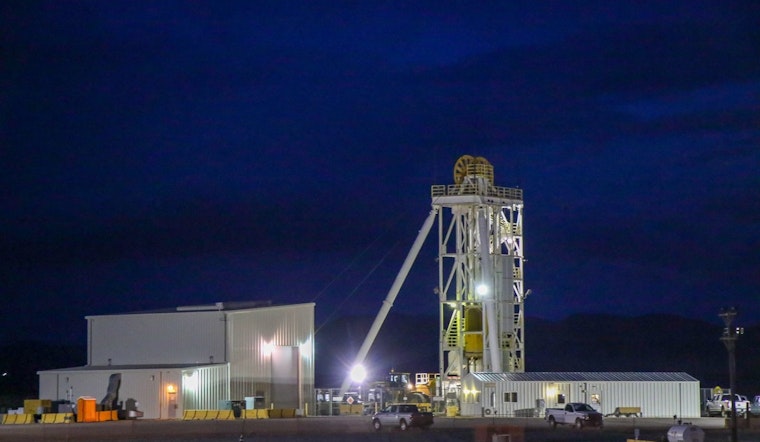
Sen. Jacky Rosen went deep underground at the Nevada National Security Site on Monday, April 13, 2026, using a tour of a high-tech lab to send a blunt message to Washington: do not bring back explosive nuclear testing in Nevada.
Standing inside a mined tunnel complex, Rosen reminded officials that Nevada "knows firsthand the terrible effects" of past nuclear blasts and warned that any fresh detonations would not stay contained in the desert. She argued that modern science can keep the U.S. nuclear stockpile reliable without returning to full-scale explosions, pitching Nevada’s lab as proof that the country can be safe without new mushroom clouds.
What’s Being Built Underground
The site’s U1a complex, now rebranded as PULSE, is in the middle of a major upgrade to host next-generation radiography testbeds, including the Scorpius and ZEUS systems. According to the Nevada National Security Site, PULSE is the only facility in the nation where subcritical experiments using weapons-relevant quantities of plutonium can be carried out. The new tools are designed to give scientists higher-resolution, multi-pulse images of implosion physics, letting them peek inside nuclear devices without crossing the line into full detonations.
Rosen’s Message And Nevada’s History
Rosen’s tour doubled as a history lesson and a warning. She used the visit to remind Nevadans and federal officials that the state’s long testing history still casts a shadow over communities downwind of the old blasts. As reported by the Las Vegas Sun, she also led the Nevada delegation in sending a letter to the administration opposing any presidential directive to restart explosive testing. Her office points to earlier commitments from National Nuclear Security Administration nominees that there is no technical need to resume detonations. Rosen argued that the new diagnostic machines let scientists certify weapons with detailed data rather than live nuclear tests.
White House Signal, Administration Clarification
The testing fight burst back onto the scene in late 2025 after President Donald Trump directed the Pentagon to consider resuming nuclear tests. Reuters reported the move on Oct. 30, 2025, and the fallout was immediate.
Administration officials later tried to narrow expectations, saying the planned activities would not involve nuclear detonations. Energy Secretary Chris Wright told Fox News the work under discussion involved "system tests" and "noncritical explosions," not nuclear blasts, according to The Associated Press. That public back-and-forth over what exactly was on the table helped spur Rosen’s on-the-ground visit this week.
Why Rosen Says The Lab Makes Testing Unnecessary
Rosen has been making the same case in Washington that she made underground in Nevada. At a Senate Armed Services Committee hearing, she argued that the PULSE upgrades and their advanced radiography systems "will provide even greater certainty and data about performance of the U.S. nuclear stockpile." In her view, sophisticated modeling combined with subcritical experiments wipes out any technical justification for new detonations.
The committee transcript shows military witnesses acknowledging the powerful diagnostic capabilities at PULSE, while also warning that keeping the option to resume explosive testing would still require time and infrastructure. Rosen pushed back, urging continued investment in stewardship tools instead of gearing up for a potential test. The exchange is documented by U.S. Strategic Command.
What It Would Take To Restart Tests
Critics say that actually returning to explosive testing at the Nevada site would be a political minefield and a logistical marathon. They note it would require fresh approvals, infrastructure upgrades, environmental reviews and significant funding, a process that could drag on for years.
Nevada’s official position is not subtle. In May 2025 the Nevada Legislature unanimously passed Assembly Joint Resolution 13, urging the federal government to maintain the testing moratorium and warning of health and economic risks, according to a summary from Nevadans Against Nuclear Weapons Testing. Local coverage and state officials often emphasize that the Nevada National Security Site sits about 65 miles northwest of Las Vegas and that decades of testing have left political and public-health scars across the state, per the Las Vegas Review-Journal.
Rosen left the site vowing to keep Nevada’s voice front and center and to press her colleagues in Washington to block any move toward renewed detonations that she says would endanger communities and rattle U.S. allies. For now, the fight is likely to play out in Armed Services Committee hearings, letters from the Nevada delegation and continued scrutiny of NNSA projects that lawmakers like Rosen argue offer a safer, science-based path forward.




