

























































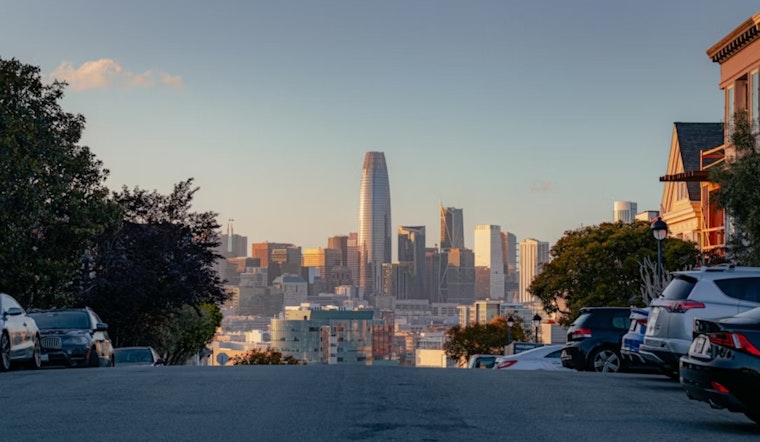
San Francisco just snagged a bragging right that may surprise even some locals: in the 2026 Happy City Index, the city lands as the happiest place in the United States, scoring 6,395 points and ranking 45th worldwide. It is the only American city to crack the global top 50, based on a mix of social, economic and environmental data rolled up into a single score.
According to AFAR, San Francisco’s 6,395-point performance put it at 45th globally, while Copenhagen took the top spot with 6,954 points. The outlet notes that the index covered 251 cities around the world, counting 250 officially assessed cities plus Kyiv, which was added as a symbolic inclusion.
How the index measures cities
The 2026 Happy City Index, created by the Institute for Quality of Life, scores cities on 64 indicators grouped into six themes: citizens, governance, environment, economy, health, and mobility, according to the Happy City Index. Researchers screened roughly 3,500 cities, narrowed that down to about 1,000 for deeper analysis, then published a top-250 ranking. The latest results were unveiled on March 20 at the Westminster building of the UK Parliament.
The project leans heavily on open, comparable data and states that only cities with reliable and measurable information make the final cut, which means some places never even enter the competition.
What lifted San Francisco
San Francisco’s score appears to benefit from a combination of its local assets and public policies. Travel outlet AFAR points to the city’s green spaces, including the 5.4-acre Salesforce Park perched above a transit terminal, as one example of the urban perks that count in the index. The ranking system also rewards strong governance, healthcare coverage, transportation options and environmental measures, so solid showings across several of those categories seem to have outweighed the city’s much-debated weaknesses.
Both AFAR and the index’s authors note that any single score is a simplification of complex local realities and is limited by what can be compared across cities. In other words, the data may say "happy," even if your rent says otherwise.
A California cluster and other U.S. entries
California cities led the American pack. As reported by the Times of San Diego, San Diego and San Jose came in at 155th and 172nd globally, respectively, leaving San Francisco as the highest-ranked city in both the state and the country.
Other U.S. entries in the top 250 included Boston, New York, Austin, Minneapolis, Denver, Houston and Milwaukee. For residents, though, the list is more of a talking point than a verdict, a tool for comparison rather than a feel-good certificate suitable for framing at City Hall.
What the ranking does - and does not - tell us
The Happy City Index describes itself as "not designed to declare a single 'best city'" but as an effort to highlight mixes of policies and conditions that tend to boost wellbeing, according to the Happy City Index. San Francisco’s placement is essentially a snapshot of how a specific set of indicators stacks up against other cities around the world.
That can be useful for policymakers and planners looking for models that work elsewhere, but it is far from a complete portrait of daily life in every neighborhood. Ongoing debates over affordability, safety, equity and basic services in San Francisco remain just as central, no matter how high the city lands on a global happiness scoreboard.





