

























































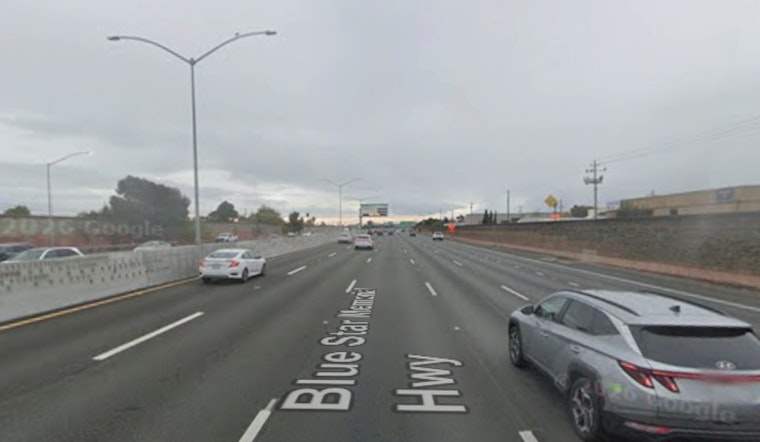
A new study delivered this week to San Mateo County transportation officials gives Highway 101's express lanes a cautious thumbs-up. On the stretch from the Santa Clara County line to Interstate 380, average commute times are down and peak-period emissions have dipped. But transit advocates and at least one Transportation Authority board member say the county should not rush into adding more lanes on the strength of these early wins.
The analysis, presented to the Transportation Authority (TA) board last Thursday, found that southbound express-lane drivers saw a 22% reduction in travel time and northbound users saw a 13% reduction. Vehicle-hours traveled dropped 16% and peak-period carbon-dioxide emissions fell 22%, according to the San Mateo Daily Journal. Nearly half of express-lane trips are toll-free under FasTrak carpool declarations, and in the last quarter, average assessed tolls came in at about $4.05 northbound and $5.29 southbound. TA staff told the board they also reviewed recent California Highway Patrol data indicating persistent enforcement problems with carpooling.
TA Update: Where Expansion Stands
The semiannual express-lane performance update appeared on the April TA board agenda as an informational item, and staff walked directors through traffic and fiscal metrics, according to the San Mateo County Transportation Authority. The TA has been studying how to expand the managed lanes since about 2020. Staff say the environmental review and preliminary design for a project north of I-380 are underway and are expected to wrap up in summer 2027.
Board Members and Advocates Push Back
Not everyone on the board was sold on the rosy numbers. Several members warned that current patterns may not reflect a stable, post-pandemic baseline and urged the TA to proceed carefully before greenlighting construction.
“I think it’s problematic to have this data that is a little scrambled,” Board Member Carlos Romero said, arguing that the authority should wait for a cleaner set of numbers before drawing firm conclusions, the San Mateo Daily Journal reported.
Carpooling, Honor System and Enforcement Headaches
The FasTrak system lets drivers self-declare how many people are in the vehicle. Carpools with three or more riders travel toll-free, while two-person carpools get a 50% discount. That setup keeps things moving at freeway speeds, but it also leans heavily on the honor system, which makes it hard to know how many true carpools are actually in the lane.
National reviews of managed-lane systems have flagged the same problem. A review by the National Academies Press notes recurring enforcement and verification challenges and suggests that agencies look at camera enforcement or other verification tools to improve compliance and data quality.
Big-Picture Fight: Funding, Freeways and Induced Demand
Regionally, express lanes on 101 are still very much in favor. The Metropolitan Transportation Commission has steered regional express-lane funds toward the corridor, and Plan Bay Area keeps US-101 managed lanes in its long-range vision, signaling that 101 remains a funding priority.
Critics counter that adding capacity can simply invite more driving and gradually erase the early congestion relief. Advocates who make that induced-demand argument, including commentary in Streetsblog San Francisco, say the region should put more money into transit and projects that support walking and biking instead of doubling down on freeway lanes.
What Happens Next
TA staff told board members they will refine their methods, incorporate fresher post-pandemic data and return with updated performance numbers before any construction decisions are made. The environmental and preliminary design work for potential expansion north of I-380 is still slated to finish in summer 2027, according to the San Mateo County Transportation Authority.
For now, the study gives officials a new set of figures to debate. Several advocates made clear that before San Mateo County moves ahead with any widening, they want stronger verification, tougher enforcement and a more settled picture of how people are actually using the express lanes in real-world, post-pandemic traffic.





