

























































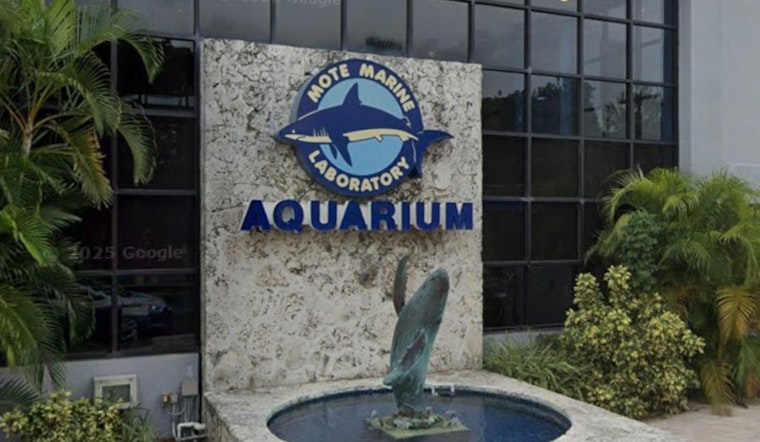
After the brutal 2017 to 2019 red tide that killed wildlife and cost the region billions, Sarasota scientists and water managers say they may finally have a few tools to fight back. A new mix of field-tested treatments and changes to how Lake Okeechobee is managed has them cautiously optimistic that future blooms will not smother the Gulf shore quite so easily. At Mote Marine Laboratory’s red tide testing campus near Fruitville Road, dozens of promising compounds have moved through lab, mesocosm and near-shore trials, while new federal rules on lake releases aim to cut the nutrient pulses that help fuel blooms. Neighbors and businesses are paying close attention, not just to the science but also to the slow, high-stakes permitting process.
Inside Mote’s Red Tide Test Lab
Mote’s Red Tide Mitigation & Technology Development Facility is packed with raceways, large mesocosms and a roughly 150,000-gallon aquarium that let scientists mimic Sarasota Bay conditions before they try anything in open water, according to Mote Marine Laboratory. In a January progress report, the lab says the initiative has examined more than 300 chemicals and compounds and backed more than 40 projects that are now moving from bench research into pilot trials. The work traces back to a 2019 state law that provides a 3 million dollar annual appropriation to the initiative, with that funding written into state statute Florida Statutes section 379.2273.
Promising Results, With Hard Limits
Some of the lab and near-shore tests have delivered steep knockdowns of Karenia brevis, the organism behind red tide, with reported reductions of more than 70 percent in certain trials that helped push a handful of products into canal and mesocosm deployments, as reported by Suncoast Searchlight. Mote projects include curcumin, a turmeric extract, clay flocculation and commercial formulations that researchers say killed cells and reduced toxins in controlled settings. No one is calling it a cure, though, because scientists still have to prove that those same treatments will not harm crabs, clams, seagrass or the broader food web when used at larger scales.
Policy Shift On Lake O: LOSOM Takes Over
The U.S. Army Corps of Engineers’ Lake Okeechobee System Operating Manual, finalized in August 2024, gives managers more flexibility to hold more water in the lake and send greater flows south. Advocates say that should cut nutrient-rich discharges to the Caloosahatchee and other estuaries. Conservation groups hailed the Record of Decision as a meaningful step toward fewer damaging releases and more water reaching the Everglades, while stressing that reservoirs and treatment projects are still needed to lock in those gains. The Record of Decision, along with local analyses, indicates that fewer nitrogen pulses could shorten the duration of blooms that begin with Lake Okeechobee releases, according to the Sanibel-Captiva Conservation Foundation.
Billions On The Line For Beaches And Businesses
The financial stakes are as large as the ecological ones. An NCCOS-funded analysis estimated the 2017 to 2019 red tide event cost Florida about 2.7 billion dollars in tourism losses, a number that helps explain the intense push for both mitigation research and big-ticket water projects, according to NOAA’s National Centers for Coastal Ocean Science. That prolonged bloom also drove widespread wildlife deaths and hefty cleanup costs along Gulf beaches and waterways. Business owners, fishers and local officials argue that practical mitigation tools and upstream water quality fixes have to move forward together so one community is not left holding the bag for another.
Regulatory Red Flags And Local Skepticism
Targeted mitigation is not an easy sell for everyone. “We do believe that mitigation is probably rife with unintended consequences,” Suncoast Waterkeeper executive director Abbey Tyrna said in reporting that raised alarms about non-target impacts. Other local leaders point to the 2019 lawsuit over Lake Okeechobee discharges as one reason the Corps ultimately shifted to LOSOM. Supporters say those legal and public pressures forced more transparency around releases and pushed agencies to spell out clearer risk frameworks before signing off on large-scale deployments. Community groups and shellfish farmers, who could feel any missteps first, plan to scrutinize permits and post-deployment monitoring.
What Comes Next On The Water
Mote’s progress report notes that several candidate products have cleared toxicity screens and a few have received permits for limited field trials, but researchers warn that the next natural bloom will be the real measure of whether these tools can be scaled up safely, according to Mote Marine Laboratory. Until that test arrives, scientists, regulators and coastal communities will be watching closely to see whether a careful mix of small, targeted deployments and smarter lake management can finally keep the Gulf from turning red.




