

























































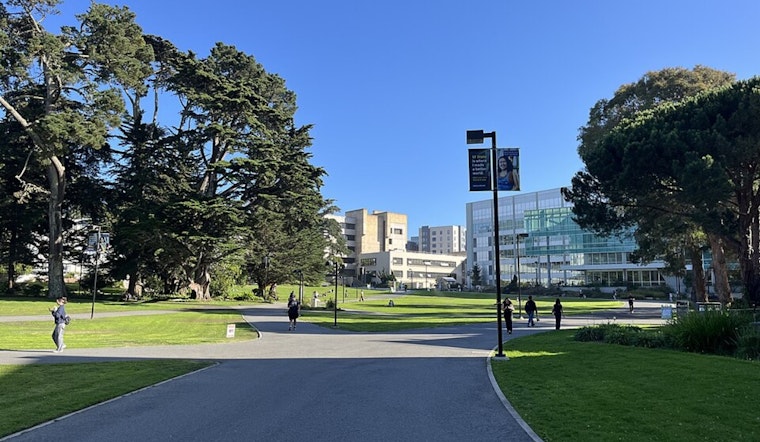
San Francisco State students walked into a public bargaining session with university leaders on Wednesday and walked out calling it a win, after administrators agreed to engage with a five-point list of demands. The hourlong meeting at Malcolm X Plaza zeroed in on budget transparency, stronger protections for undocumented students, campus rules for artificial intelligence and improvements to dorm conditions. Organizers say the session capped months of organizing that grew out of last year’s pro-Palestinian encampment and a semester of general assemblies.
Public Bargaining In Malcolm X Plaza
Student negotiators faced off across tables from President Lynn Mahoney and a panel of administrators, pressing for immediate action on housing, financial transparency and immigration protections. Mahoney told KQED, “I think we do need to set rules for AI,” and signaled that she was open to continuing work with undocumented students and their allies on concrete supports. According to KQED, students said they had won Wednesday's session and are planning another general assembly next week to debrief and map out their next steps.
Budget Pressure Has Been Building
Organizers frame the showdown as the latest chapter in a longer story of program cuts and shrinking course offerings, while administrators argue they are realigning academics to match falling enrollment. Golden Gate Xpress reported that the university offered voluntary buyouts to tenured and tenure-track faculty in December, and SFSU’s human resources office outlines the Voluntary Separation Incentive Program and timelines on its website. University data and planning pages show enrollment slipping from roughly 30,000 students a decade ago to just over 20,700 in recent years, and some majors and minors are being considered for suspension or discontinuation in spring 2027. SFSU HR and campus academic planning provide details on the buyouts and the program review timeline.
From Encampment To Organized Bargaining
Student leaders say the Student Union has been trying to turn raw protest energy into durable institutional power, building department-level unions, hosting weekly assemblies, and launching a student-run podcast to amplify its platform. KQED reports that the group pulled together at least nine smaller department unions during the 2025-26 school year and that more than 180 students, graduate students and campus workers came out for a general assembly last semester. Organizers say that kind of grassroots infrastructure helped push administrators into a public bargaining stance that traditional student government has struggled to secure.
Legal Limits And What Comes Next
One of the headline demands was a public promise that the university will not hand over the names of students or faculty who take part in political actions, which organizers argue would help shield participants from federal immigration enforcement or surveillance. That is where campus politics runs into federal law: the Family Educational Rights and Privacy Act allows disclosure of education records in response to a lawfully issued subpoena or court order, and schools are generally required to make a reasonable effort to notify students before complying, according to the U.S. Department of Education’s Student Privacy Office. For now, student leaders say they will keep organizing, using assemblies and public bargaining sessions to see whether the administration’s on-the-record commitments can be turned into enforceable campus policy.





