

























































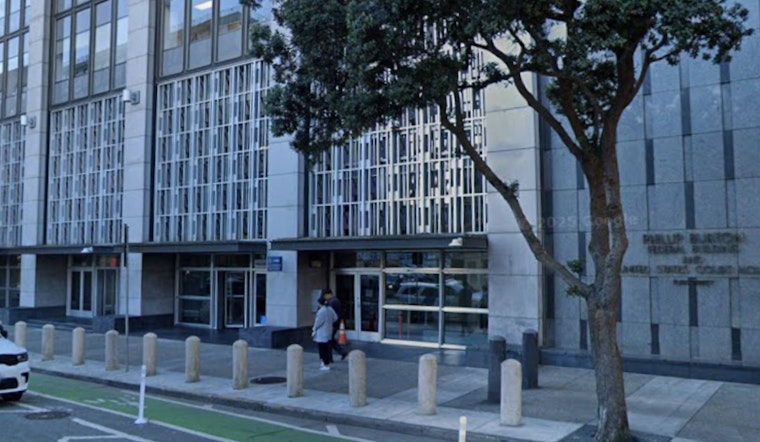
A federal judge in San Jose is keeping alive a civil-rights lawsuit that accuses the Santa Clara County Bar Association and its chief executive of shredding a father's bias complaint without ever reading it. The order allows the case to move forward, even though the bar and its CEO had urged the court to dismiss the claims on jurisdictional and timing grounds. The plaintiff says the destroyed paperwork was his only formal channel to raise alleged misconduct in family court, and that the dispute has left him separated from his children for years.
In an order issued last Wednesday, U.S. District Judge Araceli Martínez-Olguín denied the defendants' motion to dismiss and found that the amended complaint alleges enough to proceed on claims, including those brought under 42 U.S.C. § 1983, according to the court docket on Justia Dockets & Filings. She rejected arguments that the federal court lacked jurisdiction under the Rooker–Feldman doctrine and that the claims were time-barred, and she concluded that factual disputes about whether the bar acted under color of state law should be worked out through litigation rather than at the pleading stage, the docket reflects.
The suit was filed by Michael C. Sternberg, a self-represented litigant who posts online under the name "Father in Exile." It centers on paperwork he says he mailed in June 2021 under Local General Rule 3(B) to both the presiding judge and Santa Clara County Bar Association executive Sherry Diamond. Sternberg later learned that, in an October 2023 communication to a State Bar arbitration program, Diamond said she had shredded the packet without reading it, an admission that appears in the federal court filings, as reported by Davis Vanguard.
What Rule 3B Does
Local General Rule 3(B) is an informal complaint process that the Superior Court approved jointly with the Santa Clara County Bar Association to handle allegations of courtroom bias. Both the rule and the complaint form name the bar association's executive officer as a designated recipient. The SCCBA's public staff page lists Sherry Diamond as CEO and general counsel, the role Sternberg says made her the official gatekeeper for his complaint, according to the bar's website, Santa Clara County Bar Association.
How the Court Viewed It
Judge Martínez-Olguín concluded that whether Diamond and the SCCBA were acting under delegated judicial authority, and therefore could be treated as state actors for purposes of Section 1983, raises factual questions that cannot be resolved on a motion to dismiss. The court also allowed the plaintiff's conspiracy claim to survive, so the case will move on to develop a fuller factual record, according to Davis Vanguard.
Legal Context
The complaint invokes 42 U.S.C. § 1983 and points to California's duty for lawyers to report serious misconduct by peers under Rule of Professional Conduct 8.3. That rule and the State Bar's guidance on reporting provide context for the plaintiff's allegation that an attorney who received evidence of possible fraud or judicial misconduct should not have destroyed it, according to the State Bar of California.
What’s Next
The judge has given Sternberg 30 days to file a second amended complaint to sharpen his allegations, a deadline that falls on May 8, 2026. The defendants may file another motion to dismiss after the amended complaint is submitted, and the case could be years from final resolution, the court record indicates, according to Justia Dockets & Filings.
For now, the ruling marks a rare early procedural win for a pro se litigant challenging how informal complaint channels function in Santa Clara family court. The order has renewed attention on whether local bar associations that administer court-created complaint systems are performing state functions when they effectively gatekeep access to review.





