

























































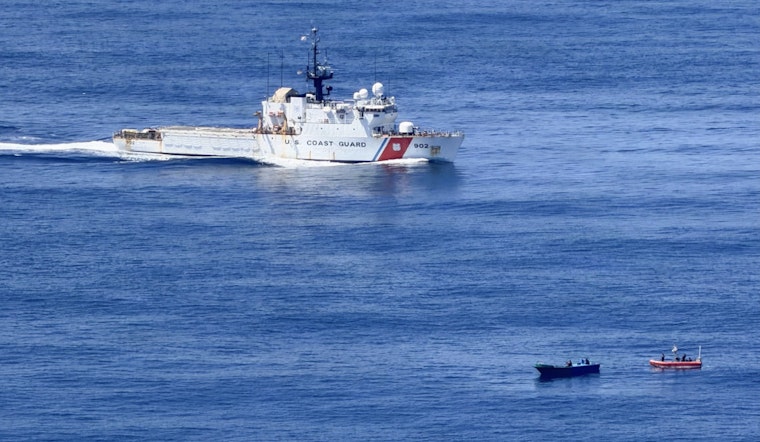
Mexican fishermen looking for red snapper off South Texas are finding something else instead: handcuffs. A series of recent detentions in U.S. waters, documented by officials and local reporting, has turned routine patrols in the Gulf into a flashpoint over border security, fisheries protection and even the fallout from SpaceX launches near Boca Chica. On the Mexican side, crews say shrinking catches and unusual marine deaths are pushing them farther offshore, sometimes across the line into U.S. territory.
Federal prosecutors are increasingly treating those commercial crossings as crimes instead of the kind of routine seizures that used to end with a warning and a tow. In a June 9, 2025 press release, the U.S. Attorney's Office for the Southern District of Texas said four fishermen from Playa Bagdad pleaded guilty after authorities reported finding about 693 pounds of red snapper, four sharks and roughly 1,200 hooks on a 25 foot boat that had drifted well north of the maritime boundary line. Prosecutors framed the case as part of a policy shift that could leave commercial crews facing prison time and steep fines instead of a quick release.
The U.S. Coast Guard, working alongside Customs and Border Protection and Homeland Security Investigations, has been intercepting lancha style boats north of the Maritime Boundary Line and hauling in big catches that never make it to market. In recent press releases, the U.S. Coast Guard has listed several interdictions off South Padre Island and Corpus Christi, including operations that seized roughly 450 pounds of red snapper before turning the crews over to federal authorities. Officials say the stepped up patrols are meant to defend U.S. fish stocks and maritime sovereignty, not just rack up arrest statistics.
Launches, livelihoods and the Gulf
Fishers from Playa Bagdad and nearby coastal villages tell a different story. They say their nets started coming up light as SpaceX ramped up testing at Starbase, and many locals now blame rocket launches, debris and shock waves for the drop in their catch. In January 2026, the Washington Post reported that villagers described sonic booms, explosions and floating debris offshore, and that some crews had pushed farther into the Gulf to find enough fish to make a trip worthwhile. Scientists caution that no direct causal link between the launches and declining catches has been established, but environmental groups argue the cross border impacts are serious enough to warrant a formal study.
The arrests and seizures at sea are also feeding a familiar political fire on land. According to coverage by WOAI’s Immigration Crisis podcast, highlighted by WOAI / News 4 San Antonio, the detentions and the broader pattern of lancha incursions have turned into talking points at rallies and in the Texas Capitol. Protesters and state officials spar over whether this is primarily a border security failure, a conservation issue or a symptom of economic collapse in coastal Mexican towns, while local hosts say the story neatly ties together resource protection, immigration enforcement and cross border hardship.
Legal consequences
On the legal front, the stakes are rising fast. Federal charges can include alleged violations of the Lacey Act and related statutes that carry serious prison time and heavy fines. The same press release from the U.S. Attorney's Office for the Southern District of Texas notes that each defendant faces up to five years in prison and potential fines of as much as 250,000 dollars, and prosecutors have openly signaled a move away from simply seizing the catch and sending crews back home. Defense lawyers and advocates, for their part, argue that these cases raise hard questions about intent, subsistence fishing and the economic pressures that push small boats into risky waters.
Federal reporting has also connected some of the illicit fishing activity to larger criminal enterprises. The AP has reported on Treasury actions that link the Gulf cartel to lancha operations and an illicit trade in red snapper and shark products, a mix that complicates both fisheries management and law enforcement. Authorities say that combination of conservation concerns, organized crime and cross border economics goes a long way toward explaining the surge in interdictions.
For coastal communities on both sides of the border, the choices are stark. Fish close to home and risk coming back with half empty nets, or push into contested waters and risk criminal prosecution. With Coast Guard patrols, federal courtroom battles and unresolved environmental questions all converging in the same stretch of ocean, the fight over who gets to fish the Gulf shows little sign of ending anytime soon.





