

























































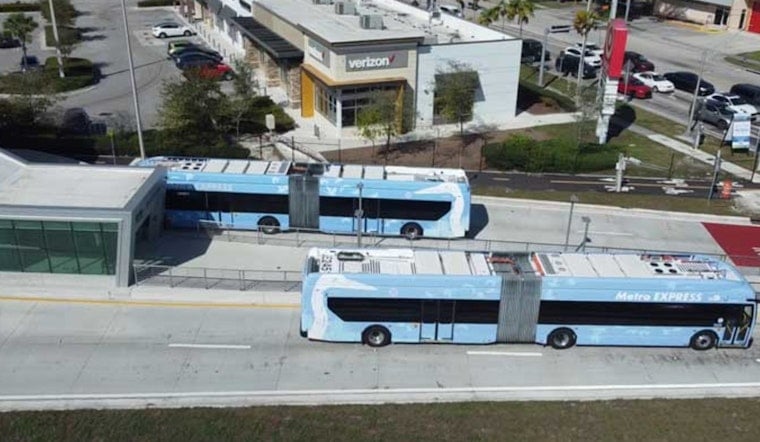
Rush hour on Miami's South Dade TransitWay started off rough this morning after a software communications problem sidelined much of the BRT 601 fleet, slowing trips for commuters who rely on the dedicated busway.
With only a limited number of regular BRT 601 buses available, Miami‑Dade Transit rolled out backup vehicles to keep service running. Those stand-ins did not all have level BRT doors, so boarding took longer at some stations as riders adjusted to different door layouts and slower passenger flow. County transit crews said they put extra buses on the line and focused on simply keeping people moving while technicians zeroed in on the glitch.
What Miami‑Dade Transit posted
In a morning post on X, Miami‑Dade Transit told riders that a "software communications issue" was limiting the number of BRT 601 buses in operation. The agency said additional vehicles had been deployed while the Department of Transportation and Public Works works with the manufacturer to sort out the problem.
The post warned passengers to expect delays, follow modified boarding instructions, and cooperate with bus operators and security staff at stations. It also pointed out that standard BRT buses carry four doors, while some of the backup buses only have two. That mismatch can slow down boarding and exiting at busy platforms, especially when crowds are already building.
How service is being adjusted on the TransitWay
Route 601 is the Metro Express BRT that runs along the South Dade TransitWay, stopping at 14 dedicated BRT stations. Route 602 acts as the TransitWay Local, serving all local TransitWay stops. According to the Miami‑Dade County site, the two routes are meant to complement each other and give riders alternate boarding options when express service is cut back.
During the current disruption, some 602 trips are expected to use BRT platforms, and riders should be ready for schedules that feel less predictable than usual.
Electric‑bus troubles add context
The snag comes on top of broader reliability concerns involving Miami‑Dade's newer electric buses. Investigative reporting by Local 10 found that nearly $96 million worth of electric buses are out of service across Miami‑Dade and Broward, and confirmed that Miami‑Dade accepted 69 Proterra buses that have proved difficult to maintain.
electric bus boondoggle coverage notes that Proterra's bankruptcy and subsequent asset transfers have left agencies uncertain about parts, warranties, and who is responsible for servicing the vehicles. Those questions can shrink spare‑vehicle pools and make quick fixes harder to pull off. In that environment, a software or hardware fault on a newer fleet can ripple through the system faster than it might with a more traditional diesel lineup.
What riders should do
For now, riders are being urged to pad their commute times, watch station signage for any temporary boarding changes, and check in with operators or security staff about the quickest option to their destination. For real‑time updates and any follow‑up instructions, see Miami‑Dade Transit on X along with the county's regular rider‑alert channels.



