

























































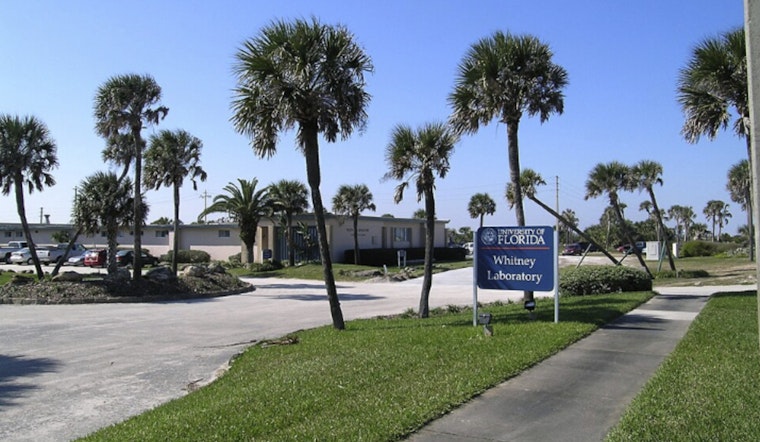
On a quiet stretch of the St. Augustine shoreline, scientists at the University of Florida's Whitney Laboratory are watching sea stars do something humans can only dream about: calmly regrow lost arms and repair damaged nervous tissue. By tracking how these animals respecify local cells and flip embryonic gene programs back on, researchers are getting a rare look at whole-body regeneration that could eventually inform how to nudge human cells into a repair mode.
As reported by Action News Jax, local teams at the Whitney Lab are pairing old-school seawater tank experiments with modern gene-mapping tools to watch the repair process unfold in real time. That coverage underscores how the facility doubles as a public-facing hub, translating complex bench science while researchers quietly chip away at the molecular details behind regeneration.
How sea stars rebuild tissue
In controlled lab systems, sea star larvae have been shown to crank up expression of the developmental transcription factor Sox2 in cells at the wound site. Those Sox2-positive cells then contribute to new neural tissue even when cell division is experimentally blocked, offering a clean look at how identity changes can drive repair. A detailed 2022 study in eLife used transgenic tracing to show that regeneration in these animals combines lineage-restricted progenitors with respecified cells that recycle embryonic gene regulatory programs to rebuild the nervous system.
Why it matters for human medicine
Those conserved programs are not just a curiosity. Similar Sox2-positive progenitors and organizing cell types appear in highly regenerative vertebrates, where they have been linked to brain and spinal cord repair. Recent work in Nature Communications, along with broader reviews in the field, points out that pinpointing the cells that organize regeneration is a crucial step toward therapy. The same sources also warn that turning these basic discoveries into safe human treatments will take years of patient work and new strategies to control cell states.
What's next in St. Augustine
Back on the First Coast, the Whitney Laboratory is keeping one foot in the community and one in the genome. According to the lab's event and news pages, staff are continuing public lecture series and outreach while ramping up single-cell and genomic profiling of regenerating tissues. Those efforts are framed as a way to speed up the mechanistic science and to help local residents see how basic marine biology might eventually feed into long-term advances in regenerative medicine.
Researchers are quick to stress that sea stars are tools for understanding fundamental biology, not instant blueprints for human cures. Still, each gene and cell type mapped after injury narrows the gap between curiosity-driven discovery and potential therapies. For now, the message from St. Augustine is simple: some of the best hints for fixing the human body may be hiding in the tide pool.





