

























































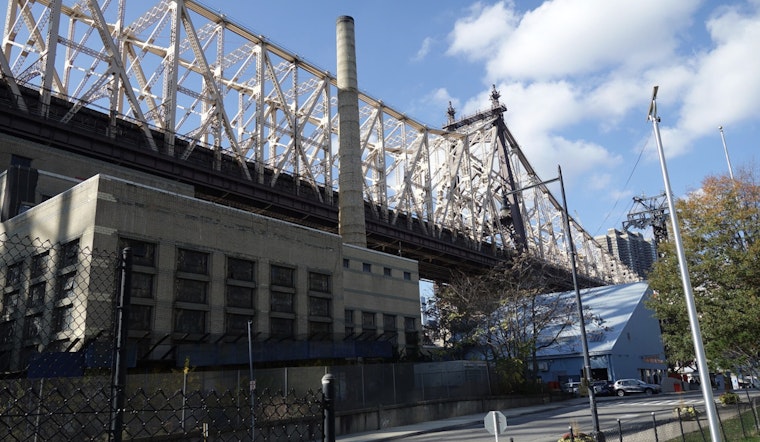
On Roosevelt Island, patience is running low and questions are piling up as crews move toward tearing down the hulking, decommissioned steam plant tucked under the Queensboro Bridge. Residents say that winter prep work, including the removal of underground oil tanks and excavation around the site, sent fumes and strange odors wafting into nearby apartments, fueling fears about asbestos, lead and petroleum contamination. A community town hall with city agencies is now set for April 15, 2026, and many locals are treating it as a make-or-break moment.
The city says the work is an emergency
City officials insist this is not some casual demolition job. They say the project is being handled as an emergency after the Department of Buildings ordered action on the deteriorating structure. In a summary shared with state Sen. Liz Krueger's office, HPD reported that DOB inspectors found the plant and its smokestacks "in severe disrepair and at risk of collapse" and that licensed contractors have been brought in to remove hazardous materials and oversee demolition. The same memo notes that eight underground oil tanks had been dismantled and taken out by Feb. 4, with more tank removals, soil sampling and continuous air monitoring planned, according to Sen. Liz Krueger's newsletter.
Residents and preservationists say they were left in the dark
Neighbors and preservation advocates say those assurances raise nearly as many questions as they answer. They argue that an "emergency" demolition is barreling ahead without a complete public record of how the decision was made or what, exactly, is in and under the aging plant. The Architectural Community Alliance of Roosevelt Island and allied activists say typical industrial toxins such as lead paint, asbestos, mercury and heavy fuel oil are likely present in or around the complex and accuse the city of sidestepping any meaningful public environmental review, concerns that have also been flagged in coverage by Roosevelt Islander.
In response, ArchRI and others have rallied around a petition demanding that demolition halt until environmental and structural documents are released and vetted. That petition has logged more than 1,400 verified signatures, according to the petition.
Records show a history of petroleum spills
Public records suggest the community’s worries are not entirely hypothetical. Regulatory databases and past environmental investigations link multiple petroleum storage tanks and several closed-status petroleum spill reports to addresses tied to the hospital and steam-plant complex. Limited subsurface testing in the area has also found elevated semi-volatile organic compounds and certain metals in a handful of test borings. Those findings are summarized in the remedial action plan for the CornellNYC Tech project, which reviewed historic tank and spill records for the vicinity along with soil and groundwater data for the site, per CornellNYC Tech's RAP.
What the city says it will do - and what residents want
HPD says it has a playbook for handling the hazards that may be uncovered. According to its memo, licensed asbestos abatement contractors will manage hazardous materials, contaminated soil will be wrapped and contained on-site in polyethylene during removal, and a third-party firm will conduct air monitoring during abatement and controlled work on the smokestacks. The agency also says DOB permit applications have been filed and were in final review as the project shifted from preliminary work to abatement and controlled demolition, steps laid out in the HPD summary shared with Sen. Krueger's office.
Residents, however, want more than technical bullet points. They are calling for a clear accounting of the environmental risks, a full paper trail explaining the emergency designation and a transparent plan for what happens to contaminated debris once it leaves the island.
Legal questions and oversight
Locals say that roughly a dozen tanks were pulled out in February without obvious public-facing permits, a claim HPD disputes, pointing to its oversight plan and sampling work as evidence that proper procedures are in place. The demolition and related briefings have surfaced in public materials from the Roosevelt Island Operating Corporation, and the project remains squarely on regulators' radar. If city or state agencies determine that required permits or cleanup rules were skipped or mishandled, enforcement actions by DOB, the NYC Department of Environmental Protection or the New York State Department of Environmental Conservation could follow. Residents say they intend to push hard for records and answers when they get city officials in the same room on April 15, according to RIOC meeting materials and reporting by Roosevelt Islander.
How that town hall plays out will likely determine whether the steam plant comes down under a tightly controlled, fast-tracked emergency process or becomes the focus of a longer public battle over cleanup standards and historic preservation. In the meantime, islanders say they are watching closely for soil and air test results, permit records and a concrete plan for debris removal as demolition efforts move ahead.


_065_-_Goldwater_Hospital_Steam_Plant.jpg)