

























































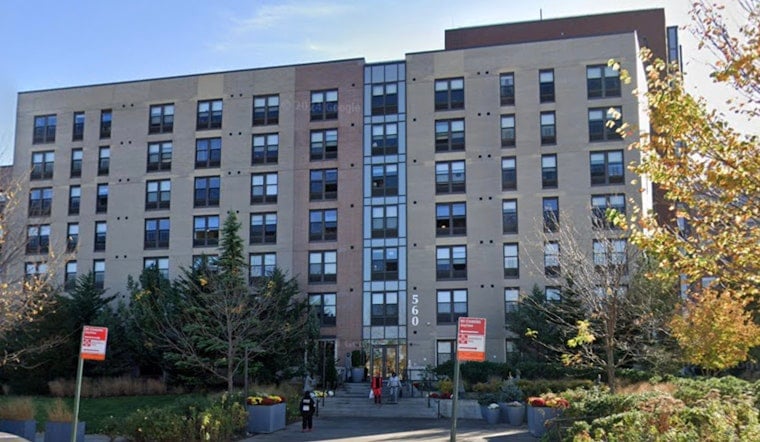
CAMBA, one of Brooklyn's largest social service nonprofits, has reached a settlement requiring it to help nonpaying tenants pursue financial assistance before seeking their eviction. The agreement resolves a federal lawsuit brought by three tenants with mental and physical disabilities who accused the organization of pushing default eviction judgments through Housing Court without telling judges about residents' disabilities or accommodating their needs.
The case, Jimenez v. CAMBA, Inc., was filed on October 7, 2025, in the U.S. District Court for the Eastern District of New York by The Legal Aid Society and co-counsel O'Melveny & Myers LLP, according to The Legal Aid Society. The complaint charged that CAMBA violated the federal Fair Housing Act, New York State Human Rights Law, and New York City Human Rights Law by seeking default judgments against disabled tenants without notifying the court or providing required accommodations. As reported by amNewYork, the settlement agreement itself was filed Monday.
According to the same amNewYork report, CAMBA brought 162 nonpayment eviction cases against tenants across nine buildings during 2024 and 2025. The three tenants who sued alleged that the nonprofit's eviction policies failed to accommodate their needs and deprived them of housing and human rights protections, and that their disabilities contributed to their failure to appear in court.
What CAMBA Must Now Do Before Filing to Evict
Under the settlement, CAMBA must exhaust reasonable financial alternatives before pursuing eviction against nonpaying tenants. That includes helping tenants apply for New York City's emergency rental assistance grants, known as One-Shot Deals, which are administered by the Human Resources Administration and, per ACCESS NYC, cover rent arrears while requiring most non-SSI recipients to repay the funds over time. Financial assistance under the settlement also includes payment plans and subsidy assistance, the amNewYork report notes.
CAMBA staff must also take specified steps before seeking eviction, including instructing their lawyers to note a tenant's supportive-housing residence on any eviction filing. Evictions will stop moving forward when tenants are actively cooperating to obtain rental assistance, per the settlement terms described in the amNewYork report. CAMBA has three months to implement the new procedures, and must provide Legal Aid with reports on eviction proceedings among its supportive housing tenants going forward.
A Model for Other Providers, Advocates Hope
The Legal Aid Society will monitor and enforce the agreement for 15 months. Maddie Reichman, an attorney involved in the case, said clients should not lose their homes because rent arrears problems were not given a meaningful opportunity to be resolved, according to the same account. The Legal Aid Society hopes the new system will serve as a model for other supportive housing providers across New York City.
CAMBA faced a request for comment on the settlement, the report indicates. Founded in 1977 as the Church Avenue Merchant Block Association, CAMBA has grown into one of Brooklyn's largest social service nonprofits, operating more than 180 programs with an annual operating budget exceeding $200 million and serving more than 70,000 New Yorkers annually, according to CAMBA Housing Ventures. The organization manages supportive housing for homeless individuals and families in New York City, serving people who often face mental illness and substance use disorders.
A Citywide Pattern of Friction
The settlement lands amid broader friction between publicly funded supportive housing landlords and the disabled tenants they serve. Reporting from May 2025 documented growing tensions citywide as supportive housing providers increasingly sought eviction warrants for nonpayment while tenants reported receiving inadequate services, fueling calls for Housing Court reform. The Supportive Housing Network of New York, a trade group, issued guidelines in 2023 urging providers to prioritize early intervention and financial counseling over eviction filings.
Underlying pressures on the system remain significant. In July, The Legal Aid Society and the Empire Justice Center filed a separate lawsuit against New York State, arguing that decades-old public assistance shelter allowances violate Article XVII of the state constitution because they fail to cover current rental costs, driving low-income tenants toward eviction. Nationally, federal court rulings this month invalidated the U.S. Department of Housing and Urban Development's fiscal year 2026 Continuum of Care funding rules, according to Legis1, creating financial uncertainty for permanent supportive housing programs across the country.
Low-income tenants facing eviction in New York City can access free legal representation regardless of immigration status through the city's Universal Access to Legal Services law, funded through the Human Resources Administration's Office of Civil Justice, though legal aid providers have frequently faced severe caseload bottlenecks. CAMBA separately was designated this summer to receive a $500,000 grant from New York State's $30 million Latinos United for Change Equity Fund to expand Bronx workforce programs, a separate funding stream unrelated to the eviction settlement.



