

























































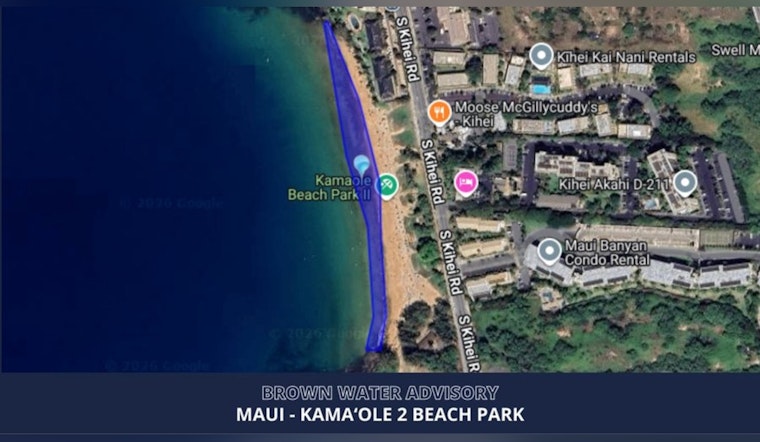
Storms have turned the shoreline at Kamaʻole 2 Beach Park into a muddy mess, prompting state officials on Tuesday to slap a Brown Water Advisory on the popular South Maui spot. The nearshore waters were reported as visibly brown and unusually turbid, and health officials are urging beachgoers to stay out of the ocean while the murk lingers. The warning comes as a series of storm-fueled water quality alerts ripple across multiple islands.
A #BrownWaterAdvisory has been issued at Kamaʻole 2 Beach Park on Maui. For more information: https://t.co/LdASQzyYIa https://t.co/qjpsK33NtF
— Hawaiʻi State Department of Health (@HawaiiDOH) April 14, 2026
What officials are saying
According to the Hawaiʻi State Department of Health, environmental health staff observed brown, turbid conditions at Kamaʻole 2 and issued the advisory on Tuesday. The department’s alert post directs the public to online tools that track current water quality advisories statewide. The governor's office, in a state news release, has also urged residents and visitors to use extra caution as flood watches, runoff and storm cleanup continue across the islands.
Why brown water matters
The Clean Water Branch explains that brown or cloudy coastal water is more than just unappealing to look at. Runoff can carry sewage, pesticides, animal waste and other contaminants that raise the risk of skin, wound and gastrointestinal infections and can attract sharks closer to shore. Brown Water Advisories are issued when heavy rain, runoff or flash flooding are likely to have pushed land-based pollution into nearshore waters, and officials note that the ocean does not actually need to appear brown for an advisory to be justified. The branch’s guidance also outlines practical steps people can take to reduce health risks while these advisories are active.
Kamaʻole II's recent advisories
Kamaʻole II has been here before. The beach was placed under a Brown Water Advisory earlier this year after storm runoff, according to local coverage. As Maui Now reported in January, officials routinely recommend staying out of the ocean after heavy rain until the nearshore waters clear up and conditions return to normal. Lifeguards or county crews may also put up advisory signs at the beach while alerts are in effect.
What to do if you were exposed
The Clean Water Branch advises anyone who has been in brown water to rinse off with soap and clean water as soon as possible and to avoid swallowing ocean or stream water. People should watch for symptoms such as diarrhea, vomiting or fever in the days after exposure. Those with open cuts or wounds, young children, pregnant people, older adults and individuals with weakened immune systems are considered at higher risk and are urged to avoid contact with affected water entirely while advisories are posted. For ongoing updates or to sign up for email alerts, the Department of Health directs the public to its DOH water-quality advisories system.





