

























































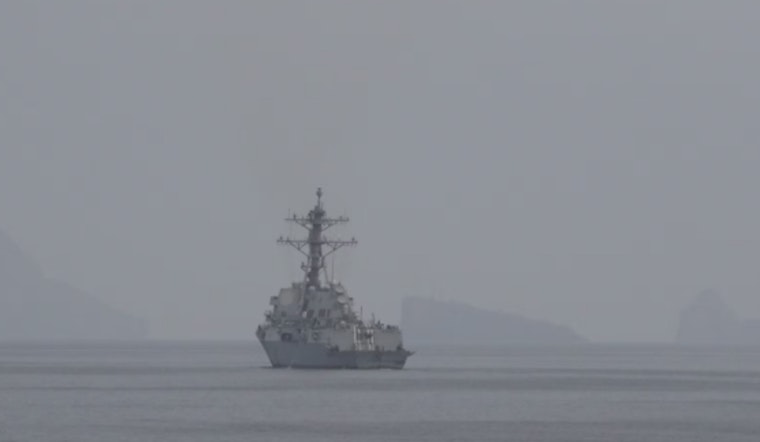
From their headquarters in Tampa, U.S. Central Command has pushed two guided-missile destroyers into one of the most tense stretches of water on the planet. U.S. officials say the warships sailed through the Strait of Hormuz yesterday to start setting conditions to clear sea mines that have snarled Gulf shipping for weeks.
The transit, reported as the first American warships to pass through the strait since the latest conflict with Iran began, unfolded as U.S. and Iranian negotiators sat across from each other in cease-fire talks in Islamabad. Mines laid by Iran's Revolutionary Guard have nearly strangled normal traffic, leaving tankers rerouted, delayed offshore and global energy markets on edge.
What the U.S. Says
U.S. Central Command said the USS Frank E. Peterson (DDG-121) and USS Michael Murphy (DDG-112) moved through the narrow chokepoint and operated in the Arabian Gulf as part of a mission to “ensure the strait is fully clear of sea mines,” with additional forces, including underwater drones, set to join the effort, according to U.S. Central Command.
“Today, we began the process of establishing a new passage and we will share this safe pathway with the maritime industry soon to encourage the free flow of commerce,” Adm. Brad Cooper said in the release. CENTCOM framed the work as a technical and measured operation to restore commercial transit, not the opening move of a new offensive.
Tehran Pushes Back
Iranian state media reported that military spokesman Ebrahim Zolfaghari denied any American warships had approached and entered the strait and claimed a U.S. vessel was instead warned away, according to AP. The dueling storylines highlight how fragile the Islamabad cease-fire talks are, even as U.S. and Iranian delegations try to keep the negotiations on track. Independent confirmation from third-party ship trackers has been thin, a reminder that the fog of war is still hanging low over the Gulf.
Why Hormuz Matters
The Strait of Hormuz funnels roughly one-fifth of the world’s seaborne oil, making it a pressure point for global energy markets that have already been rattled by the partial closure, as reported by The New York Times. U.S. officials say mines laid by the Islamic Revolutionary Guard Corps were scattered and, in some cases, left free-floating, turning the job of carving out a reliably safe corridor into a high-stakes technical puzzle.
Successfully reopening the route will be an early test of the cease-fire and of whether Tehran follows through on arrangements to let commercial traffic move again through the narrow waterway.
How Mine Clearance Works
Mine-countermeasure operations typically pair surface ships with unmanned underwater vehicles, sonar sweeps and careful marking of safe lanes. It is a slow, methodical process that can take days or longer to certify, according to USNI News.
Public statements by U.S. officials and naval analysts indicate the destroyers are there to help establish and protect a corridor while specialized mine-hunting assets gear up to comb nearby waters for both moored and drifting ordnance. Even with modern drones doing some of the most dangerous work, finding and neutralizing sea mines remains painstaking and risky, with little margin for error.
Political and Market Fallout
President Donald Trump hailed the move on social platforms, arguing that the U.S. was “doing a favor to countries all over the world” by initiating mine clearance, according to Axios. Shipping firms and insurers, still staring at charts filled with detours and delays, warned that any new route would need independent verification before they treat it as business as usual.
So far, data shows only a modest number of tankers using the corridor under the cease-fire, per CBS News. That caution has kept price swings elevated and routing decisions complicated, even as diplomats try to hammer out a more durable truce.
Legal Questions
Iran’s proposal to impose passage fees or tolls on vessels passing through the strait runs headlong into long-standing principles of freedom of navigation under international law, and negotiators have already flagged it as a major sticking point, according to AP. Accepting formal tolls would lock in Tehran’s leverage over the chokepoint and all but guarantee a fresh source of geopolitical friction, even if the last mine is cleared.
That fight over who can charge what, and under which rules, is likely to be a headline issue in any follow-on agreements.
What to Watch Next
Officials say the coming days will reveal whether the U.S. effort can produce a verifiable, repeatable corridor for commercial ships and how Iran chooses to respond to American movements at sea, The New York Times reported. If some of the mines have drifted, clearing and certifying a safe passage could drag on for days or weeks, prolonging high insurance premiums and routing headaches for shippers.
Maritime authorities, insurers and ports will be watching closely for official clearance notices before they relax their guard and reset schedules. Until then, the Tampa-based command that greenlit this high-profile transit will remain in the spotlight as the world waits to see whether its new lane through Hormuz holds.





