

























































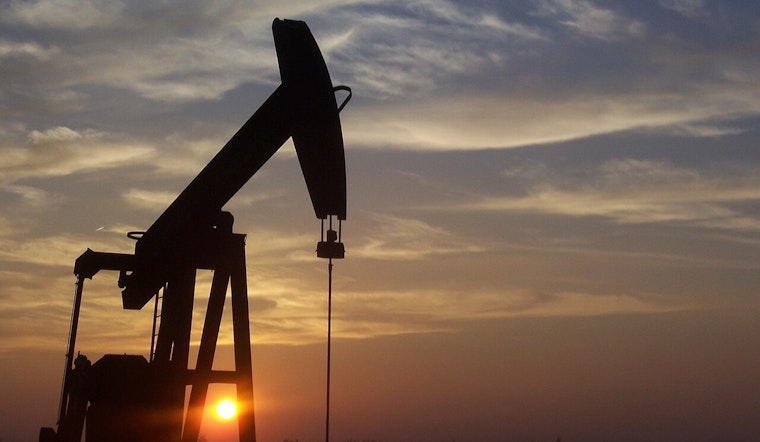
On her 375-acre ranch outside San Angelo, retired engineer Jackie Chesnutt spends her days less like a cattlewoman and more like a field inspector. She tests water, documents spills and, when she feels she has no other choice, cuts power to oil equipment she says is fouling her land. The five wells on her property produce almost nothing in most months, yet operators keep them nominally “active,” she says, to avoid the cost of plugging them. Her fight over rusting tanks and oil slicks has become a local snapshot of a statewide problem that can leave landowners, regulators and taxpayers holding the bag.
Reporting on Chesnutt’s case found that her lease was operated by a small company called CORE Petro. The company and the property owner trade accusations over who is responsible for spills, who is blocking access and who is failing to follow the rules. CORE Petro told reporters it could not afford the large bills to plug wells and said it has posted a $50,000 bond as a financial backstop. Inspection records from regulators cited pollution violations at the site that were later marked as resolved. Those reporting and document details were laid out by The Texas Tribune.
Numbers behind the problem
State records show just how widespread the issue is. In its December 2025 monitoring report, the Railroad Commission counted roughly 155,000 inactive wells and nearly 100,000 active wells that were producing fewer than 10 barrels a day. At the same time, the commission’s orphan-well listing, which tracks wells that have been inactive at least 12 months and whose operators have fallen behind on required filings, had topped about 11,000 entries. That growing list signals a mounting backlog for the state’s plugging program. Those figures come from Railroad Commission reporting and its orphan-well files, according to the Railroad Commission of Texas.
How rules let wells linger
Keeping a barely producing well classified as “active” can be surprisingly easy. Operators can report token or intermittent production, which delays any requirement to plug the well. Critics call this marginal production and argue it is being used less as a business strategy and more as a loophole.
“Operators will often produce a de minimis amount of hydrocarbons to stay out of inactive status,” Adam Peltz of the Environmental Defense Fund told reporters, calling the tactic widely abused. Inspection notes from the Chesnutt lease added fuel to those concerns; an RRC inspector recorded no change in tank volume between July and September 2025 even though production had been reported for that period. Those reporting and interview details were documented by Inside Climate News.
Federal money, local limits
On paper, help is coming from Washington. The Inflation Reduction Act created a national Methane Emissions Reduction Program that set aside $350 million in formula grants for states to support voluntary plugging of low-producing conventional wells. Texas’ environmental agency was conditionally awarded about $134 million to build a state program focused on plugging marginal wells.
Agency documents show that the Texas Commission on Environmental Quality is still designing the grant process and plans to rely on operators to voluntarily participate rather than face new mandates. Details on the federal program come from the U.S. EPA, and the conditional award to Texas is described in the agency’s TCEQ strategic plan.
New law, a long clock
State lawmakers have also tried to tighten the rules. In 2025, the Legislature passed Senate Bill 1150, a measure that narrows the window for how long inactive wells can sit idle before they must be plugged. The law directs the Railroad Commission to move wells that are both old and long-inactive toward either plugging or reactivation, using phased timelines and limited exceptions.
SB 1150 gives the commission new rulemaking authority to carry out those directives, but it also allows multi-year phase-in periods that will stretch implementation over several budget cycles. The bill text and legislative analysis lay out those deadlines, exceptions and compliance paths in detail. The measure is summarized in Senate Bill 1150.
What it means for landowners
Advocates say the combination of federal money and the new state law could eventually speed up cleanup, yet they argue that it is still not enough. Many reform groups are pushing for higher bonding requirements, clearer production reporting and faster enforcement so that the public is not left paying to clean up private wells that operators walk away from.
Their recommendations include raising the production threshold that defines what counts as an “active” well and tightening financial assurance requirements so companies cannot indefinitely sidestep the true cost of plugging. Those proposed fixes are detailed in reform analyses and toolkits published by Commission Shift.
For now, ranchers like Chesnutt say they will keep pressing state regulators and small operators to either clean up or pay up, a difficult task given the sheer number of wells and the slow pace of new rules. The data, the federal grant money and the new law give officials tools they have not had at scale in years, but plugging or retiring thousands of wells is still a long, expensive process, as reported by The Texas Tribune.





