

























































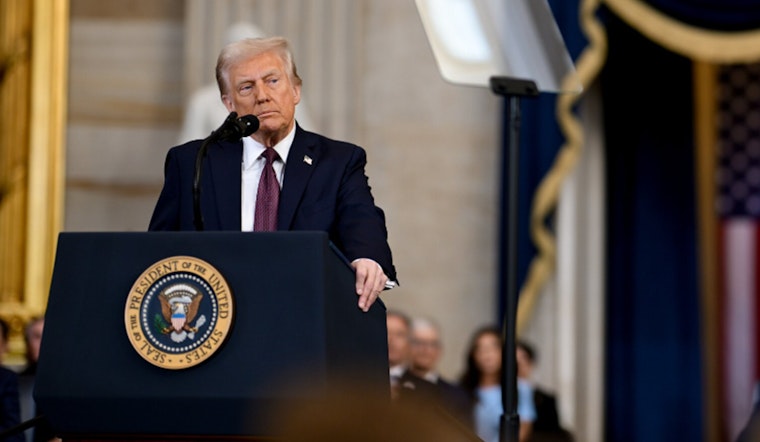
President Donald Trump said late Tuesday he is putting planned U.S. strikes on Iran on hold for two weeks, arguing negotiators have made just enough progress to justify a temporary pause if Tehran reopens the Strait of Hormuz. He cast the move as a conditional off-ramp that hinges on Iran’s immediate cooperation and follow-through.
In a post on his social platform, Trump said he would "suspend the bombing and attack of Iran for a period of two weeks" and that the pause was "subject to the Islamic Republic of Iran agreeing to the COMPLETE, IMMEDIATE, and SAFE OPENING of the Strait of Hormuz," according to AP. He said the decision followed "conversations" with Pakistan Prime Minister Shehbaz Sharif and army chief Gen. Asim Munir. Video of the president's remarks was posted by Fox 4 News Dallas-Fort Worth.
What the President Wrote on Truth Social
Trump's post, excerpted by Axios, read in part: "I agree to suspend the bombing and attack of Iran for a period of two weeks." He described the move as a "double sided CEASEFIRE" and said the short window was meant to give negotiators time to finish a framework that both sides could sign.
Iran Accepts Pause, Promises Safe Passage
Iran's Supreme National Security Council said it had accepted a two-week ceasefire and would meet U.S. representatives in Islamabad, while Iranian Foreign Minister Abbas Araghchi pledged Tehran would allow "safe passage" through the Strait of Hormuz in coordination with Iran's armed forces, according to AP. Iranian officials stressed that accepting the pause did not mean the war was over and warned that the halt in strikes did not itself end hostilities.
Pakistan's Mediation
Pakistan has been running back-channel talks, with Prime Minister Shehbaz Sharif urging both Washington and Tehran to observe a two-week ceasefire while negotiations continue, according to The Straits Times. Islamabad has offered to host the discussions and pushed the two-week proposal just hours before Trump's original deadline.
Markets and Allied Responses
Financial markets quickly reacted to the prospect of a breather. S&P futures edged higher and oil futures slipped as traders dialed back immediate supply fears, Axios reports. A White House official also told Axios that Israel had agreed to suspend its own strikes in parallel with the U.S. package, which would kick in once Iran follows through on reopening the Strait of Hormuz.
Legal Questions
Even as diplomats welcomed the pause, international leaders warned that the threats and rhetoric that came before it raised serious legal and moral concerns. The U.N. secretary-general said he was "deeply troubled" by language suggesting an entire people might be made to suffer, and the pope called that kind of talk unacceptable, the Boston Globe reported. Human rights groups and international law scholars say deliberate strikes on power plants and bridges can amount to war crimes.
Negotiators are now racing to turn the tentative framework into something that can actually hold, with mediators saying talks could begin in Islamabad this week as they try to nail down a longer truce, according to CBS News. For now, the ceasefire is thin ice, resting on technical guarantees for safe passage through Hormuz and on both sides sticking to their word in the days ahead.


