

























































University City’s mayoral race has turned into a fight over how fast the city should change, who benefits from big development and why some parks look tired while cranes loom over Olive Boulevard. Two-time incumbent Mayor Terry Crow is asking voters to stick with him, while 3rd Ward Councilmember Bwayne Smotherson is arguing that the city’s splashy projects have outpaced long-promised neighborhood fixes. Smotherson is focusing on lagging progress in the city’s historically Black 3rd Ward, uneven park maintenance and what critics describe as missteps around flood control and construction-related work. Crow points to his track record, including the Market at Olive project and the recent Annex and Trinity renovation, as proof that his approach is working.
Smotherson's pitch
Smotherson is pitching his campaign as a push to speed up neighborhood revitalization, open up City Hall and make sure new investment lifts longtime residents, not just new arrivals. His campaign platform highlights priorities such as affordable and senior housing, workforce development and targeted home-repair programs that are connected to recent redevelopment efforts. He notes his work on the Third Ward Revitalization Task Force and argues that residents north of Olive Boulevard have been told to wait for visible change for far too long, a message he has repeated at stump speeches and neighborhood gatherings; see Smotherson for Mayor.
Crow's defense and endorsements
Crow, for his part, says University City has been stabilizing its finances and landing major private investment, and he told reporters at a recent debate that a majority of councilmembers back his overall direction for the city. He regularly cites the Market at Olive development and the restoration of the historic Trinity and Annex buildings as examples of the city’s ability to pull off complicated projects, and some local leaders have publicly endorsed his leadership. St. Louis Magazine covered the debate and the endorsements that have become talking points among residents since the forum.
Market at Olive and the TIF question
Both Crow and Smotherson previously backed the Market at Olive development, a multi-acre retail complex anchored by Costco that was promoted as a way to grow University City’s sales-tax base. The council approved a substantial tax-increment financing package to make the project pencil out and to help lure major tenants expected to boost city revenue. St. Louis Public Radio examined the project’s early approvals and how TIF factored into moving it forward. Developers involved with the effort describe it as roughly a 50-acre overhaul of the Olive corridor, and Seneca CRE details the project’s scope and tenant mix.
Where the TIF dollars were meant to go
The Market at Olive redevelopment plan also carved out money specifically for nearby neighborhoods. Planning documents show roughly $15 million slated for reinvestment in other project areas, with about $10 million of that earmarked for housing revitalization in the 3rd Ward. Those figures and allocations are laid out in the city’s planning materials and redevelopment plan, available through University City.
Trinity and Annex: A showpiece and a point of friction
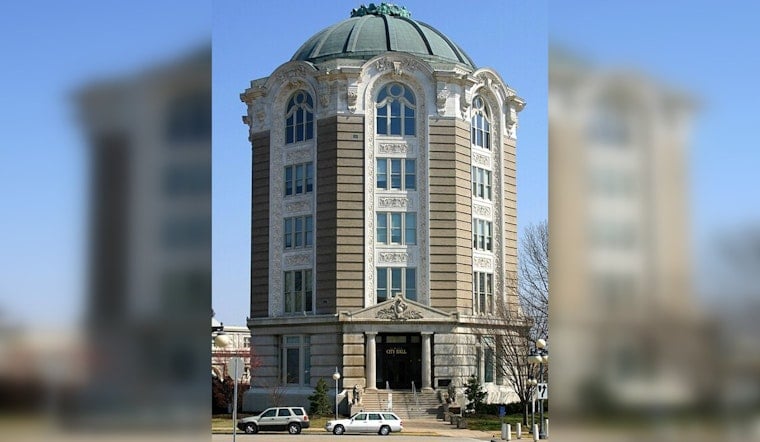
The newly completed renovation of the Trinity and Annex buildings behind City Hall has become shorthand for the larger split between the candidates. Crow has promoted the roughly $28 million project as a preservation-minded investment that brought police and municipal court services back into permanent quarters. Smotherson voted against the plan, arguing the city passed up a chance to build out more community-centered space in the Loop. St. Louis Magazine reported on the clash over the project and the sharply different ideas about how those buildings should serve residents.
The 'free dirt' problem
One of Smotherson’s more pointed talking points is what critics now call the "free dirt" episode. Soil moved from the Market at Olive site to the Ruth Park golf facilities was not graded the way staff and residents expected, which left the driving range out of commission and forced the city to bring in outside help to get the area playable again. The episode, along with the council item that approved a contract to restart the driving range work, is spelled out in official council records. An agenda packet from University City notes the dirt transfer and the remediation steps staff recommended.
With Crow emphasizing continuity and the delivery of big-ticket projects, and Smotherson calling for faster follow-through and tougher neighborhood accountability, voters now have a clear choice in how University City sets its pace. The outcome will decide how the city balances fresh commercial growth against the long-promised upgrades to aging parks and housing, and whether current momentum feels like progress on the ground or a reason to swap out the person holding the gavel.



