

























































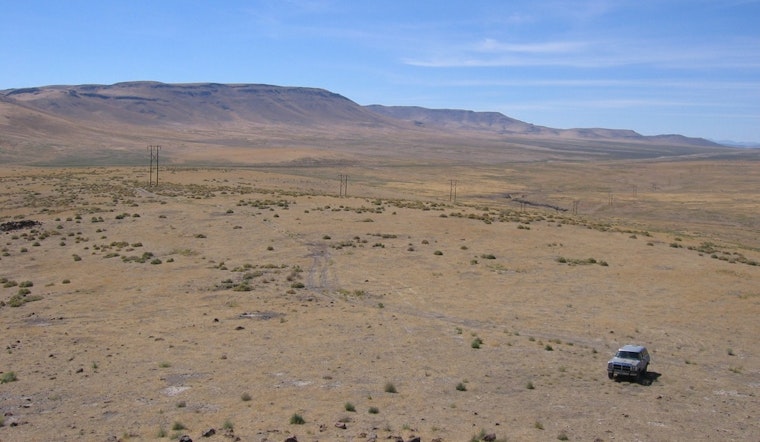
A newly public energy company says it is sitting on what could be the largest mineable uranium deposit in the United States: roughly 37 million pounds of uranium concentrate tucked inside the McDermitt Caldera on the Oregon–Nevada border. Eagle Nuclear Energy, which completed a business combination and began trading this year, plans to pair mining at the Aurora site with a Nevada processing location and its own small modular reactor technology. The company is pitching the project as a national security and energy independence play that, if it clears permitting, could help feed a domestic nuclear fuel chain.
Company on the ground
During a reporter visit to the rim of the McDermitt Caldera, CEO Mark Mukhija told journalists, "It is the largest extractable, measured and indicated uranium deposit in the country," and said the firm has acquired mineral rights covering roughly 7,500 acres at the Aurora Uranium Project. Journalists reported that core samples and mapping show higher grade zones that the company says are ready for follow up drilling, as reported by MyFOX28.
What the technical data shows
The project's S-K 1300 technical report lists 32.75 million pounds of indicated U3O8 and 4.98 million pounds inferred, about 37.7 million pounds in total, and places the deposit roughly six miles west of McDermitt on Bureau of Land Management land. The report also details more than 360 mining claims covering nearly 30 square kilometers and describes access by an unsealed road off U.S. Route 95, according to the company's S-K 1300 technical report (SK-1300 TRS).
How the business is structured
Eagle completed its business combination and began trading on Nasdaq under the ticker NUCL on Feb. 25, 2026, and the company says the listing provided capital to advance Aurora and related programs. Management has outlined a vertically integrated plan that pairs raw material development with reactor technology and downstream processing as a single platform, according to the company's Nasdaq corporate update.
Permitting and processing plans
The company has named SLR International as the lead permitting manager to steer federal and state reviews and says it is pursuing permits for a drill program and environmental baseline work ahead of a pre-feasibility study. Eagle has also signaled plans for a processing facility and a Nevada refining site for extracted uranium, but those steps will depend on Bureau of Land Management and Oregon DOGAMI approvals before any ground disturbing work can begin, per the company's announcement (Eagle Nuclear).
Why it matters nationally
The Aurora numbers land at a time when U.S. reactor owners purchased about 51.6 million pounds of U3O8 equivalent in 2023 and 55.9 million pounds in 2024, while domestic production supplied only a small share of deliveries, roughly 5% in 2023 and about 8% in 2024, according to the Energy Information Administration's annual uranium report. A single resource of around 37 million pounds would be significant in the context of annual U.S. purchases, but turning a resource into refined, reactor ready fuel requires years of capital, engineering and regulatory approvals (EIA).
Permits, timelines and next steps
Company materials outline a near term program: permit applications for a July drill campaign have been filed, a 27,000 foot drill program is planned to feed a pre-feasibility study, and management says the PFS is targeted for the second half of 2027 if work stays on schedule. Whether Aurora moves from resource estimate to actual production will depend on environmental reviews, public input and the lengthy federal and state permitting process, milestones that commonly stretch over multiple years.
Until permits are granted and a processing and refining pathway is in place, Aurora remains a large measured resource rather than an immediate source of domestic reactor fuel. The next public signals to watch are drill results, permit decisions and any engineering milestones Eagle releases as it advances toward a pre-feasibility study.



